Compare northern lights tour prices in Reykjavik. Learn where the money goes, booking strategies that actually save, and what's worth paying for.
Where Your Tour Money Goes
Northern lights tour prices from Reykjavik typically run from about 9,000 to 15,000 ISK (roughly €60-€100) for a standard group bus tour, climbing to 20,000-35,000 ISK (€135-€235) for small-group or super jeep departures. That's a wide range for what looks, on paper, like the same product: a few hours outside the city, away from light pollution, hoping for green light overhead. The gap comes down to a handful of concrete cost drivers, and understanding them helps you figure out what you're actually paying for before you book.
A big bus tour spreads its costs — fuel, driver, guide, insurance — across 40 or 50 passengers. A super jeep tour splits the same costs across 8 to 15 people, sometimes fewer. Do the math and the per-person premium makes sense without anyone needing to charge more "because it's premium." You're not paying for luxury so much as paying for a smaller denominator.
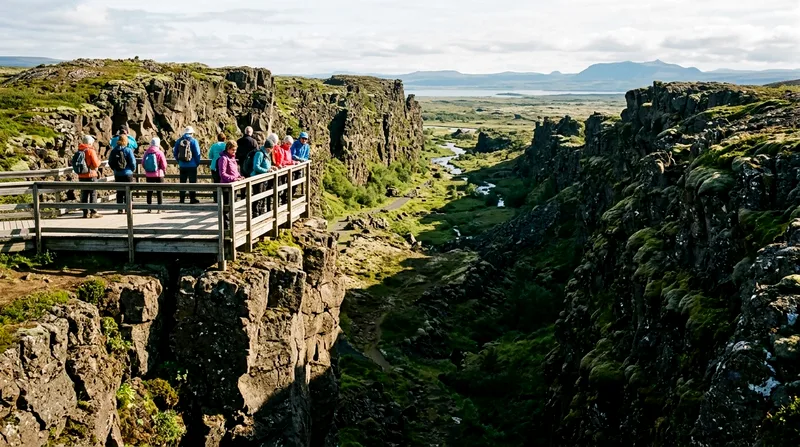
Location also matters more than most operators advertise. Tours departing straight from a Reykjavik hotel pickup point often drive 40-60 minutes to reach dark-sky areas like Þingvellir National Park or rural spots along the Golden Circle route. Operators based further from the city, or those with more flexible routing, can sometimes reach clearer skies faster — which matters on a night with patchy cloud cover over the capital region.
Group bus tours are the cheapest way to chase the aurora from Reykjavik, while small-group jeep tours cost two to three times more for better flexibility and access.
Northern lights tour Reykjavik price comparison by tour type
| Tour Type | Typical Price (ISK) | Group Size | Best For |
|---|---|---|---|
| Standard coach bus tour | 9,000-15,000 | 30-50 people | Budget travelers, first-timers |
| Minibus tour | 13,000-20,000 | 15-20 people | Couples, small families |
| Super jeep tour | 20,000-35,000 | 8-15 people | Hikers, those wanting remote access |
| Private/custom tour | 45,000+ | 1-6 people | Photographers, special occasions |
| Self-drive (rental car) | Fuel + rental only | Flexible | Confident winter drivers |
Approximate price ranges per person; actual rates vary by operator, season, and demand — check current prices when booking.
Guide expertise and group size
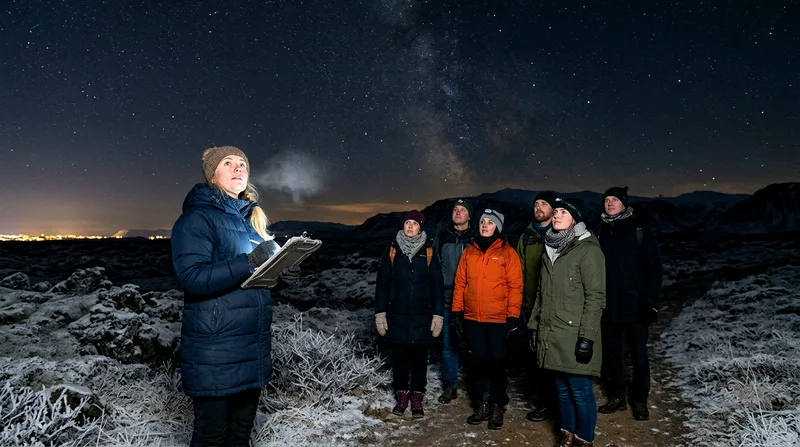
A good aurora guide is reading real-time aurora forecasts (the Icelandic Met Office's aurora and cloud cover forecast is the standard reference), cross-checking cloud models, and making a judgment call about where to drive — sometimes rerouting mid-trip. That skill costs money to retain, and it's the single biggest factor separating a tour that finds a clear patch of sky from one that sits under cloud cover for three hours. Large bus tours generally use the same forecasting tools, but with 50 people aboard, there's less flexibility to change plans on a whim — the bus has committed to a route and a schedule. Smaller groups in jeeps or minibuses can pivot faster, which is part of why they cost more.
Transportation and vehicle type
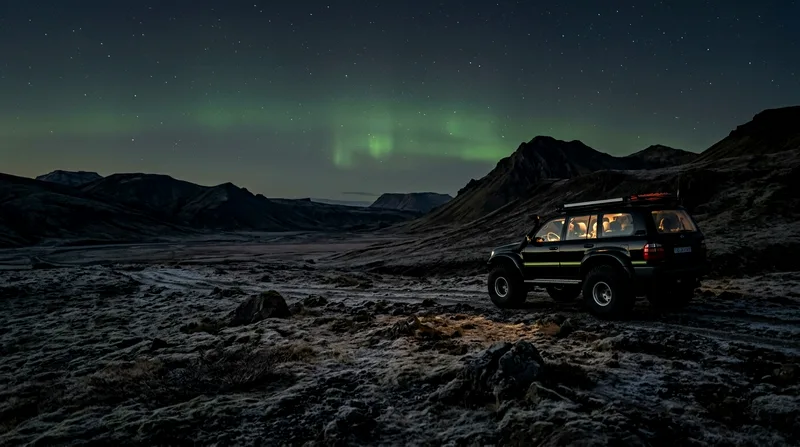
Standard coach buses are the budget option and they're perfectly fine on clear, accessible nights. Super jeeps cost more because they can reach higher, more remote, less light-polluted terrain that a 50-seat bus simply can't navigate in winter conditions — gravel roads, snow-packed tracks, occasional river crossings. If you're chasing the darkest possible sky away from Reykjavik's glow, that off-road capability is worth something. If you're fine with a reasonably dark field 45 minutes from the city, you're paying extra for access you may not need.
Legitimate Ways to Save on Aurora Tours
There's no secret discount code that cuts a northern lights tour price in half — anyone promising that is probably padding the original price first. But there are real, durable strategies that affect what you pay and what you get for it.
Book during shoulder season
Aurora season in Iceland runs roughly late August through mid-April, when nights are dark enough. Peak demand — and sometimes peak pricing — clusters around the Christmas and New Year weeks and February half-term holidays for European travelers. Shoulder months like late September, early October, and March often have similar aurora activity (solar activity doesn't care about tourist calendars) but softer demand, which can mean more availability at standard rates and less chance of a sold-out departure forcing you into a pricier option.
Reserve early for better rates
Many operators price tours lowest when booked weeks ahead and raise rates — or simply sell out the cheaper tiers — as the date approaches. Booking a northern lights tour 3-4 weeks before your Reykjavik trip generally gets you more choice of departure time and vehicle type, not just a better price. Waiting until you land in Iceland means picking from whatever's left, which in peak weeks (New Year, February) can mean only the priciest small-group slots remain.
Rebooking guarantees and free rescheduling
This is the single most valuable feature in aurora tour pricing, and it's not really about saving money upfront — it's about not wasting the money you already spent. Most reputable operators offer a free rebooking policy: if the tour goes out and sees no aurora activity (due to cloud cover, not just "faint" activity), you can rejoin another departure at no extra cost, sometimes for multiple nights until you see something or your trip ends. Given how weather-dependent aurora viewing is — Reykjavik's winter skies are cloudy a significant share of nights — a tour without this guarantee is a real gamble. Always confirm the exact rebooking terms before paying: some require you to rebook within a set number of days, others are open until you leave Iceland.
Combo Deals and Multi-Activity Packages
Combining a northern lights tour with another activity is one of the more reliable ways to get more value per krona, though it only pays off if you'd be doing both activities anyway. Buying a bundle you don't need just because it's labeled a "package" isn't saving money — it's spending more of it.
Aurora plus hot spring bundles
Some operators pair an evening aurora tour with a Blue Lagoon visit, or structure the day so you soak in geothermal water in the late afternoon before heading out to dark skies after sunset. Iceland has geothermal baths beyond the Blue Lagoon too — the Sky Lagoon closer to Reykjavik, or the Secret Lagoon near the Golden Circle route — and bundling either with an aurora chase can shave off transport costs compared to booking two separate round-trips from the city. The trade-off: you're tied to a fixed schedule, and if the lagoon session runs long, you might reach the aurora viewing spot later than a dedicated tour would.
Multi-night tour discounts
If you're staying in Reykjavik for several nights, some operators offer a modest reduction for booking two or three aurora attempts upfront rather than paying for a rebooking each time cloud cover ruins the first try. This works out similar to a rebooking guarantee in practice, but structured as a package rather than a refund policy. Compare the total cost against a single tour with a strong free-rebooking policy — often the rebooking route is cheaper unless you're certain you want multiple outings regardless of the first night's success.
What Not to Skimp On
Cheapest isn't always smartest with aurora tours, and this is where I'd push back against anyone telling you to just book whatever's lowest-priced. Standing outside for 1-3 hours in sub-zero temperatures, often with wind chill well below the air temperature, is a different proposition than a quick photo stop. Two things are worth paying for even on a tight budget.
Weather protection and comfort gear
Some budget operators provide thermal suits, others don't — check this before booking, because renting or buying proper winter gear separately (insulated boots, a windproof outer layer, good gloves) can cost 5,000-10,000 ISK on top of the tour if you didn't pack for it. If you're traveling from a mild climate and didn't bring serious winter layers, a tour that includes thermal overalls is worth the extra cost even if the base price is higher. Standing miserable and cold for two hours ruins the experience regardless of how bright the aurora gets.
Experienced guides and safety standards
Icelandic winter roads get icy, visibility drops fast in snow squalls, and driving conditions outside Reykjavik can turn serious with little warning. This isn't a place to pick a tour purely on price without checking that the operator has proper winter driving training and maintains 4x4 vehicles with appropriate tires. It's a fair question to ask directly when booking: what vehicle type, and what's the driver's experience with winter routes like those near Þingvellir or the South Coast toward Vik. A slightly higher price for a jeep tour with an experienced guide beats a rock-bottom bus tour that cancels last-minute due to road closures the driver should have anticipated.
Northern Lights Tour Booking Checklist
Before you hand over payment for any northern lights tour in Reykjavik, run through a short checklist. It takes five minutes and prevents the two most common complaints: paying for a tour that saw nothing, with no recourse, or discovering extra costs weren't mentioned upfront.
Verify rebooking policy before purchase
Ask explicitly: if we see no aurora due to clouds, can we rejoin a future tour for free, and for how many days is that valid? Get this in writing (email confirmation is fine) rather than relying on a verbal promise at pickup. Some operators limit free rebooking to a single reattempt; others allow unlimited attempts within your trip dates. This single detail affects the real value of the tour more than a few thousand krona difference in sticker price.
Confirm what's included in price
Check whether thermal suits, hot drinks, pickup and drop-off at your specific accommodation, and photography assistance are included or charged separately. A tour priced at 12,000 ISK with everything included can be better value than one listed at 9,500 ISK that charges extra for suit rental and doesn't include hotel pickup, leaving you to arrange transport to a meeting point. Read the fine print on the booking page, not just the headline price.
Frequently asked questions
How much does a northern lights tour from Reykjavik cost?
Standard group bus tours typically cost 9,000-15,000 ISK (about €60-€100) per adult. Small-group minibus tours run 13,000-20,000 ISK, and super jeep or premium small-group tours range from 20,000-35,000 ISK. Private tours for small groups or families start around 45,000 ISK and up. Prices vary by operator, season demand, and what's included, so compare current listings before booking.
What's the cheapest way to see the aurora in Iceland?
Renting a car and self-driving to a dark area outside Reykjavik — like parts of the Golden Circle route or the Reykjanes peninsula — costs only fuel and the rental fee, often cheaper than a group tour if you're splitting costs among several people. The trade-off is you handle navigation, winter driving, and forecast-reading yourself, with no guide and no rebooking guarantee if clouds roll in.
Are rebooking guarantees worth the extra cost?
Yes, in most cases. Aurora viewing depends heavily on weather, and Icelandic winter skies are cloudy often enough that a single tour attempt frequently sees nothing. A free rebooking policy effectively insures your money against a cloudy night, which matters more than saving a few thousand krona on a tour with no such guarantee.
Do combo tours save money compared to booking separately?
They can, particularly aurora-plus-Blue Lagoon or aurora-plus-Golden Circle day packages, since you share a single round-trip transport cost instead of two. The savings only make sense if you planned to do both activities anyway — don't add a geothermal bath to your itinerary purely because a bundle makes it look discounted.
What should I never cut costs on during an aurora tour?
Proper winter clothing and a driver experienced with Icelandic winter roads. Standing outdoors for hours in freezing wind without adequate layers, or riding with an inexperienced driver on icy rural roads, are the two areas where a cheaper price isn't worth the risk to comfort or safety.