Plan your aurora hunt with a month-by-month guide to darkness hours, cloud cover, and the best time for northern lights in Reykjavik.
Peak Aurora Season: September to March
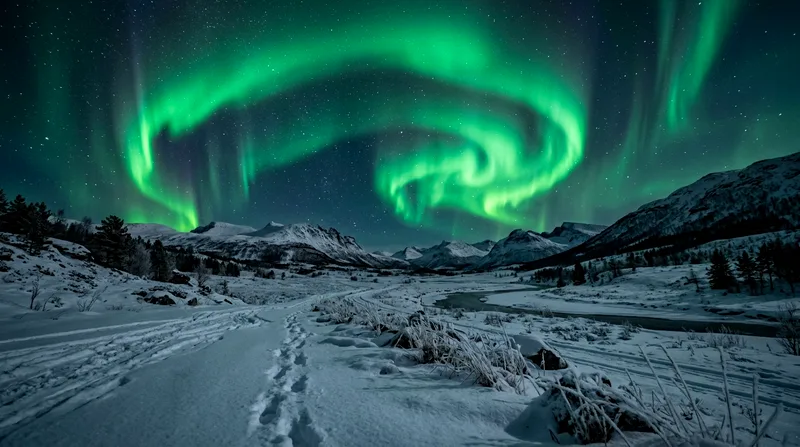
If you're asking about the best time northern lights Reykjavik visits should be planned around, the honest answer is a seven-month window: late August through mid-April, with the strongest run from September to March. Outside this stretch, the sky simply doesn't get dark enough — Iceland's latitude, just south of the Arctic Circle, means summer nights barely dim. The aurora borealis is up there year-round, but you need darkness to see it, and darkness is the one thing Reykjavik summers don't offer.
I'd push back on the common advice to fixate on December and January as the "best" months. They have the most darkness, yes, but they also bring the heaviest cloud cover and the worst odds of a clean, storm-free night. September, October, and March often deliver a better combination of reasonably dark skies and genuinely clearer weather — a trade-off worth understanding before you lock in travel dates.
Why Winter Darkness Matters
Aurora activity isn't seasonal in the way foliage or migration is — it's driven by solar wind hitting the magnetosphere, which happens constantly. What changes with the seasons is whether your sky is dark enough to notice it. Reykjavik gets around 4-5 hours of usable darkness in late August, climbing to nearly 19 hours around the winter solstice in late December. More dark hours simply means more chances to catch a display, not a stronger one. A faint aurora on a hazy October evening can be easier to see than a genuinely strong one lost in June's near-constant twilight.
Equinox Advantages Explained
There's a reasonably well-documented pattern, sometimes called the equinox effect, where geomagnetic activity tends to run higher around the spring and autumn equinoxes — late March and late September. The physics relates to the alignment between Earth's magnetic field and the solar wind, and while it's not a guarantee, it's one reason seasoned aurora chasers in Tromso and Reykjavik alike treat September and March as sneaky-good months rather than afterthoughts to the deep winter season.
Month-by-Month Breakdown and Conditions
Breaking the northern lights season Iceland offers into months helps set realistic expectations, because conditions shift more than people assume between, say, October and January.
September, early October, and March offer the best balance of darkness and clearer skies, while December and January have the most darkness but the heaviest cloud cover.
Best time northern lights Reykjavik: month-by-month darkness and conditions
| Month | Darkness Hours (approx.) | Typical Cloud Cover | Tour Frequency | Best For |
|---|---|---|---|---|
| September | 8-10 hrs | Moderate | Regular | Milder temps, equinox boost |
| October | 10-13 hrs | Moderate-high | Regular | Good balance, still mild |
| November | 14-16 hrs | High | Frequent | Long nights, variable weather |
| December | 17-19 hrs | High | Frequent | Maximum darkness, stormy |
| January | 16-18 hrs | High | Frequent | Deep winter, flexible timing |
| February | 13-15 hrs | Moderate-high | Frequent | Improving roads, still dark |
| March | 11-12 hrs | Moderate | Regular | Equinox boost, easier travel |
Figures are typical seasonal approximations for Reykjavik; actual cloud cover and clear-night frequency vary year to year, so check the Icelandic Met Office forecast before heading out.
September and October Conditions
Early autumn is underrated. Nights are long enough by mid-September (around 8-9 hours of darkness) and the weather hasn't yet turned into the wetter, stormier pattern that dominates December. Temperatures are milder too — useful if you're planning to stand outside for an hour waiting for a display, which you should expect to do. The trade-off: this is also peak tourist season for Iceland generally, so accommodation in Reykjavik and popular tour slots book up faster than you'd expect for an "off-peak" aurora month.
November Through February Peak
This is the deep-winter stretch with the most darkness — up to 19 hours in December — and it's when most tour operators run their full schedules. But it's also Iceland's stormiest period, with frequent low cloud and precipitation rolling off the North Atlantic. Reykjavik's cloud cover in December and January is noticeably heavier than in Akureyri or further inland, where drier continental air sometimes breaks through. If your trip is fixed to these months, build in at least three or four nights rather than one, and stay flexible on which night you head out.
March Aurora Opportunities
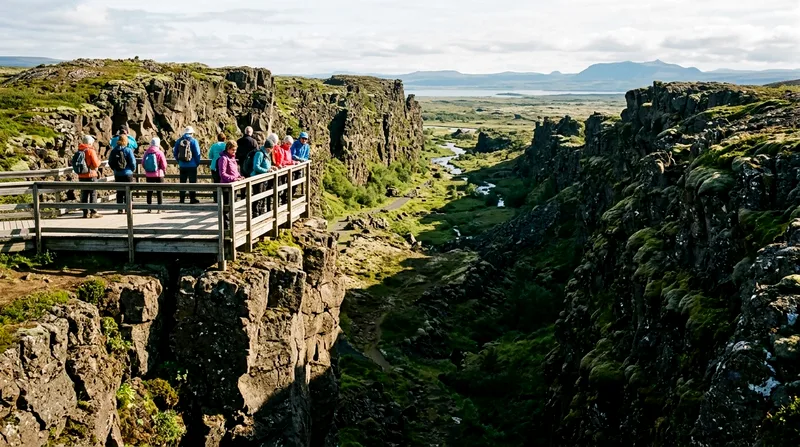
March is one of the best-balanced months: still roughly 11-12 hours of darkness, lengthening days that make for easier travel logistics, and a statistical bump in activity around the equinox. Roads to viewing spots outside the city are more reliably clear of snow than in January or February, which matters if your plan includes driving toward Thingvellir National Park or along the south coast toward Vik. By late April, lengthening daylight ends the viewing season almost entirely.
Darkness Hours and Visibility Windows
Darkness hours and visibility windows are really the backbone of any aurora forecast Reykjavik visitors rely on — more so than the Kp-index number everyone obsesses over. A Kp of 3 on a clear, dark night beats a Kp of 6 under full cloud, every time.
Midnight Sun Impact on Viewing
From late May through late July, Reykjavik experiences near-continuous twilight — not quite the midnight sun of Iceland's north, but close enough that true darkness never arrives. This is the single reason summer trips and aurora sightings don't mix, no matter how active the sun is. If someone's selling you an aurora tour in July, be skeptical; it's simply the wrong season, full stop.
Optimal Viewing Hours by Season
Within the viewing season, the best hours tend to fall between 9pm and 2am, when the sky is darkest and local light pollution has the least competing effect. In September and March, that window is tighter, so you'll want to be in position and patient by 10pm. In December and January, you have more flexibility — darkness holds from late afternoon until morning, which actually makes last-minute, weather-driven decisions easier to pull off.
Cloud Cover and Weather Patterns
Weather, not darkness, is usually the deciding factor on any given night. Reykjavik sits on Iceland's southwest coast, which catches a lot of Atlantic moisture — meaning cloud cover is a bigger obstacle here than in drier interior or northern locations.
Seasonal Weather Trends
Autumn (September-October) tends to bring more stable high-pressure spells than midwinter. December through February sees more frequent storm systems moving through, which is exactly when darkness peaks — an annoying mismatch for planning. By comparison, Akureyri in the north often reports more clear nights per month in winter, since it sits in the rain shadow of Iceland's central highlands. If your itinerary allows a few days up north, it's worth factoring in.
Clear Night Frequency
There's no official stat promising "X clear nights per month" that's reliable enough to quote precisely, and I'd be wary of any site that does. What's well established is that Iceland's Met Office publishes a cloud-cover forecast map alongside its aurora (Kp) forecast, and checking both together — not just the aurora number — is the single most useful habit for a visitor. A 20% cloud cover reading with moderate Kp will usually beat 90% cloud cover with a strong Kp.
Tour Availability and Booking Windows
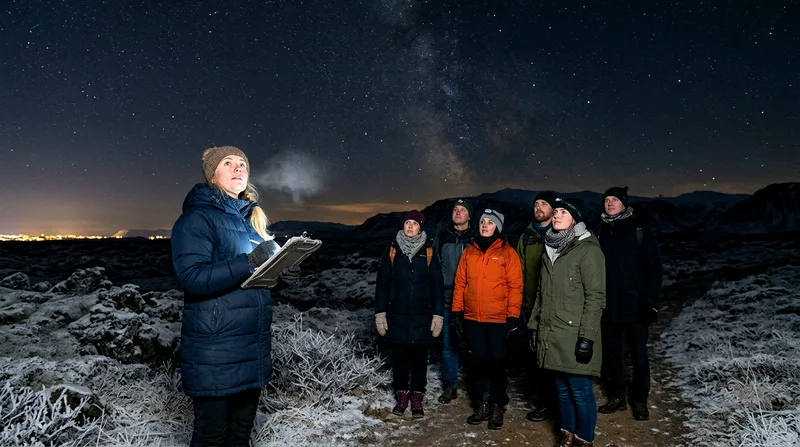
Booking a guided tour takes the guesswork out of driving to a dark spot yourself, and most operators in Reykjavik run minibus or small-coach trips that head out toward Thingvellir, the Snaefellsnes peninsula direction, or other low-light-pollution areas outside the city.
When Operators Run Tours
Most Reykjavik-based operators run northern lights tours from roughly early September through mid-April, scaling up frequency in the darkest months. Many offer a "free retry" policy — if no aurora appears, you can join another departure at no extra cost, sometimes for several nights or even within a set window. Always check this before booking, since policies vary and some only apply to specific ticket tiers. This is a genuinely useful hedge against Reykjavik's unpredictable cloud cover.
Advance Booking Recommendations
For September, October, and the Christmas-New Year period, book at least one to two weeks ahead — these windows overlap with high tourist demand and tours do sell out. For quieter stretches like mid-November or February weekdays, a few days' notice is usually fine. If your schedule allows it, compare current northern lights tour options and prices before you book, and consider pairing the aurora trip with a South Coast or Golden Circle day tour, since many operators bundle daytime sightseeing with an evening aurora add-on.
Frequently asked questions
What month has the best chance of seeing northern lights?
September, early October, and March tend to offer the best overall odds in Reykjavik because they combine sufficiently dark skies with historically clearer weather than deep winter. December and January have more total darkness but significantly more cloud cover, which often cancels out that advantage. No single month guarantees a sighting — plan for at least three to four nights regardless of when you go.
Can you see aurora in summer in Reykjavik?
No, not realistically. From late May through late July, Reykjavik doesn't get properly dark — the midnight sun effect means the sky stays in twilight even at 1am. The aurora may technically be active, but you won't be able to see it against a bright sky. Plan an aurora-focused trip for September through March instead.
How many hours of darkness do you need for aurora viewing?
You generally want at least true astronomical darkness, which in Reykjavik starts becoming reliable from late August onward. Practically speaking, aim for trips between September and March, when nightly darkness ranges from roughly 8 hours in early autumn to nearly 19 hours at the December solstice — plenty of window either way.
What weather conditions are best for northern lights?
Clear, cloud-free skies matter more than anything else, including the strength of the aurora forecast itself. Low humidity and calm, cold conditions typically correlate with clearer nights. Check Iceland's Met Office cloud-cover map alongside the Kp aurora index — a low cloud percentage with moderate solar activity usually beats the reverse.
How far in advance should you book aurora tours?
Book one to two weeks ahead for September, October, and the December-January holiday period, since demand is highest then. For quieter weeks in November or February, a few days' notice is typically enough. Look for operators offering a free rebooking policy if no aurora is seen, and compare current tour prices and availability before confirming.