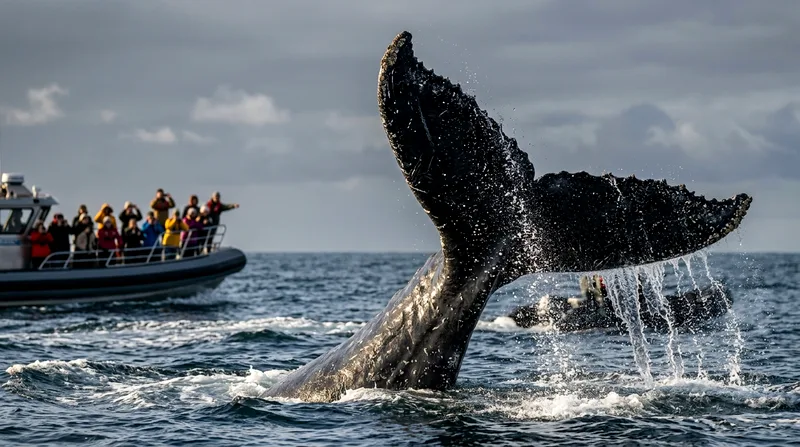
Is Whale Watching in Reykjavik Worth It? Honest Review
Is whale watching in Reykjavik worth it? Compare sighting rates, refund policies, costs, and crowds versus Húsavík before you book.
9 min read · 15 Oct 2026
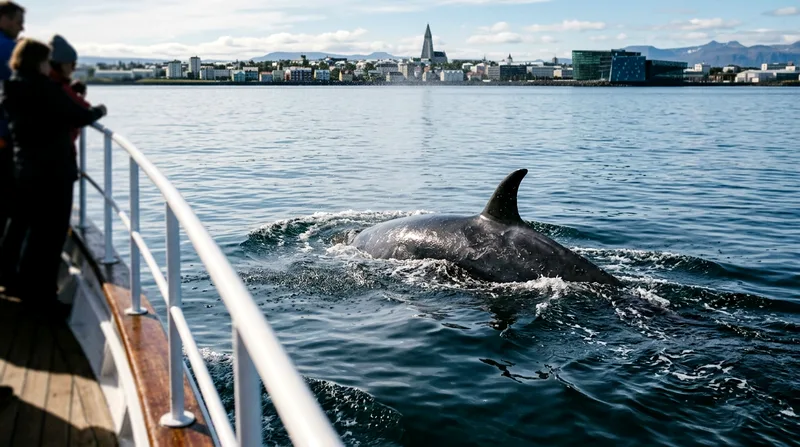
Tours & activities
Compare classic, express and luxury Reykjavik whale watching boats. Sighting rates, comfort levels, family tips and what to check before booking.
Reykjavik whale watching isn't a single product — it's three fairly different experiences wearing the same marketing photos. A classic boat, an express RIB, and a luxury cruise will all take you into Faxaflói Bay, but the person who enjoys one often hates another. Before you look at prices, figure out which category matches your body, your budget, and your tolerance for cold wind.
The classic boats — usually old fishing vessels or purpose-built catamarans converted for tourism — are the default choice, and for most travelers, the right one. They run three to three-and-a-half hours, carry anywhere from 50 to 150 passengers, and include a heated indoor cabin plus an open deck. They're slower than the express boats, which actually helps sighting odds because the engine noise doesn't scatter the animals as fast.
Express RIB boats — rigid inflatable boats seating 12 to 20 people — trade comfort for speed and intimacy. You'll be in a flotation survival suit the whole time, standing or sitting on bench seats, bouncing across the bay at higher speed to cover more ground. They suit younger, mobile travelers who want an adrenaline element alongside the wildlife-watching, not people with back problems or small children.
Luxury cruises are the newest category, usually smaller groups (20-40 passengers) on boats with proper heated lounges, sometimes a small bar or snack service, and better window visibility when the weather turns. They cost more and don't necessarily improve sighting rates — the whales don't care what boat you're on — but they improve the two hours before and after a sighting.
If cost is the deciding factor, the classic boat wins outright. It's the cheapest category per person, typically running somewhere in the lower-to-mid price bracket compared with the premium luxury trips, and the large passenger capacity means more frequent departures throughout the day — useful if your schedule in Reykjavik is tight. Groups of friends or extended families traveling together also benefit from the classic boat's size: you're not all crammed onto a 14-person RIB, and there's room to spread out if someone gets queasy and needs air. The trade-off is less personal attention from guides and a noisier, more crowded viewing deck when a whale surfaces — expect some jostling for the rail.
Classic boats are also the practical choice for families, mainly because of the indoor heated cabin, onboard toilets, and lower minimum age requirements — many operators accept children from around age 2-5, compared to the stricter age or height minimums common on RIB boats (often 8 years and up, sometimes higher). If your child gets cold fast or can't sit still for three hours, ask specifically about trip length before booking; some operators run a shorter 2.5-hour family-oriented sailing. Avoid the express RIB option with kids under about 10 — the speed, spray, and lack of shelter make for a miserable rather than exciting experience, and a few operators will simply refuse boarding at check-in if a child doesn't meet the suit size requirements.
Put side by side, the three categories differ less in where they go — most depart from Reykjavik's Old Harbour and head into the same stretch of Faxaflói Bay — and more in how you experience the two-to-four hours on the water. None guarantees a sighting; reputable operators publish rolling sighting-rate statistics (often in the 80-95% range during peak months, lower in winter), and you should ask to see current figures before paying, since they shift season to season.
Classic boats offer the best value and family access, express RIBs suit thrill-seekers who don't mind the cold, and luxury cruises add comfort without materially improving sighting odds.
Reykjavik whale watching tour types compared: duration, comfort and group size
| Boat Type | Duration | Group Size | Comfort Level | Typical Price Range | Best For |
|---|---|---|---|---|---|
| Classic Boat | 3-3.5 hours | 50-150 passengers | Heated cabin + open deck | Low-mid | Families, groups, first-timers |
| Express RIB | 2-2.5 hours | 12-20 passengers | Open air, survival suits | Mid | Thrill-seekers, active adults |
| Luxury Cruise | 2.5-3.5 hours | 20-40 passengers | Lounge seating, large windows | Mid-high | Couples, seniors, comfort-focused travelers |
Figures are typical industry ranges, not fixed prices; always check current pricing, sighting-rate stats and reviews before booking.
Sighting rates don't vary dramatically by boat type — they're driven far more by season and the guide's knowledge of where pods are feeding that week. What varies is your comfort while waiting. On a classic boat, you can retreat indoors, get a hot chocolate, and still hear the crew's announcement when something surfaces. On an express RIB, you're committed to the open air for the whole trip, suit and all, which some people find exhilarating and others find exhausting after 90 minutes of cold spray. Luxury boats add better sightlines through larger windows and sometimes a raised observation deck, which matters more than people expect when a minke whale surfaces at a distance and forty passengers all want to see it at once.
Group size is the clearest practical difference. Classic boats run large — up to 150 people on the bigger vessels — which means more deck space overall but more competition at the rail during a sighting. RIBs cap out around 12-20, so everyone gets a clear view, but there's no escaping the elements if conditions turn. Luxury cruises sit in between, 20-40 passengers, with amenities like padded seating, panoramic glass, and occasionally a small galley service that classic boats don't bother with. None of this changes whether you'll see a humpback whale or a pod of white-beaked dolphins — it changes whether the three hours feel like an expedition or an ordeal.
Don't just book the first Reykjavik whale tour that pops up in search results. Read the fine print on three things: what's actually included, what happens if the boat sees nothing, and what happens if weather cancels your slot.
Most reputable operators include a flotation or thermal suit in the price, which matters since Faxaflói Bay stays cold even in July. Check whether hot drinks are included — some classic boats offer free coffee and hot chocolate, others charge. The more important thing to check is the "whale guarantee": many operators offer a free return trip if you see no whales on your first outing, though this usually excludes dolphin or seal sightings and comes with blackout dates. Cancellation policies vary; look for free cancellation up to 24 hours before departure, since Icelandic weather forces operators to cancel sailings outright with some regularity, especially from October through March. A tour with a rigid no-refund policy during a season when cancellations are common is a red flag worth avoiding.
Nearly all Reykjavik whale tours leave from the Old Harbour, a five-minute walk from the city center, so port choice rarely matters here the way it would in Husavik or Akureyri, where operators are more spread out. What does matter is duration versus conditions — a 3-hour classic tour in a February swell feels longer than a 3-hour tour in calm June water. If you're prone to seasickness, take motion-sickness tablets about an hour before boarding, eat a light meal beforehand, and ask for a cabin seat near the center of the boat, where pitching is less extreme. Dress in layers with a waterproof outer shell, warm hat, and gloves regardless of season — wind chill on open water is brutal even on a sunny August afternoon.
Booking timing in Reykjavik whale watching comes down to two separate decisions: when in the year to go, and how far ahead to book your specific date.
June through August is peak season — more daylight, calmer average seas, and the highest sighting rates, but also the most departures sold out days in advance, particularly for smaller luxury and RIB boats. If you're traveling in July, book at least a week ahead, more if you want a specific morning or evening slot. Shoulder months — April, May, September, and October — offer a good compromise: fewer crowds, still-decent sighting rates, and more flexibility to book two or three days out. Winter (November to March) has the lowest tourist volume and lower, less consistent sighting rates, plus a much higher chance of weather cancellations, but it's also when you can sometimes combine a whale tour with a separate evening northern lights tour on the same trip to Reykjavik — something summer visitors obviously can't do.
Faxaflói Bay sits in the North Atlantic on a feeding route that different species use at different times, so what you're likely to see shifts across the year rather than staying constant.
Minke whales are the most commonly sighted species out of Reykjavik, present from roughly April through October, solitary and quick, often spotted as a brief back-and-dorsal-fin roll rather than a dramatic breach. Humpback whales show up reliably from May through September, the species most likely to put on a show with breaching, tail slaps, or fin waving — most tour marketing photos of a breaching whale near Reykjavik are humpbacks. White-beaked dolphins appear year-round but in larger, more visible pods during summer, often riding the boat's bow wake. Harbor seals haul out on skerries near the bay entrance and are visible on nearly every trip regardless of season. Outside Reykjavik, Husavik in the north is often marketed as Iceland's "whale capital" with slightly higher blue and humpback sighting rates in peak summer, so if whale density is your only priority and you have extra travel days, it's worth comparing. But Reykjavik's convenience — no extra drive, same-day booking, tours leaving every few hours from the Old Harbour — makes it the practical choice for most itineraries, including those built around Keflavik arrivals or short stopovers.
June through August gives the highest sighting rates and calmest seas, with humpback and minke whales both commonly seen. May and September are good shoulder-season alternatives with smaller crowds and still-solid sighting odds, typically only slightly lower than peak summer.
Classic boats run 3 to 3.5 hours, luxury cruises 2.5 to 3.5 hours, and express RIB tours 2 to 2.5 hours. Add 20-30 minutes for check-in and suit fitting before departure, and build in buffer time afterward since late returns happen during busy summer weekends.
Wear warm layers with a waterproof outer shell, plus a hat and gloves — wind chill on the water is significant even in summer. Bring motion-sickness tablets if you're prone to seasickness, sunglasses for glare, and a camera with a zoom lens, since whales often surface farther from the boat than photos suggest.
Classic boats generally accept children from age 2-5 and have indoor heated cabins and toilets, making them the practical family choice. Express RIB tours usually set minimum ages around 8-10 due to suit sizing and lack of shelter, so check age and height requirements before booking if traveling with kids.
Classic boats are larger, cheaper, and carry up to 150 passengers with a basic heated cabin and open deck. Luxury cruises carry fewer passengers (20-40), offer better seating, larger windows, and sometimes food or drink service, at a mid-to-high price point — but sighting rates are similar across both, since weather and whale behavior matter more than boat class.
Is whale watching in Reykjavik worth it? Compare sighting rates, refund policies, costs, and crowds versus Húsavík before you book.
9 min read · 15 Oct 2026

Compare Reykjavik sea fishing tours by length, gear, catch-and-cook options & family suitability. Book the right fishing trip for your skill level.
9 min read · 15 Oct 2026

Compare puffin watching tours from Reykjavik: boat trips, island landings, and whale-puffin combos. Find the right season, boat type, and price range.
9 min read · 15 Oct 2026
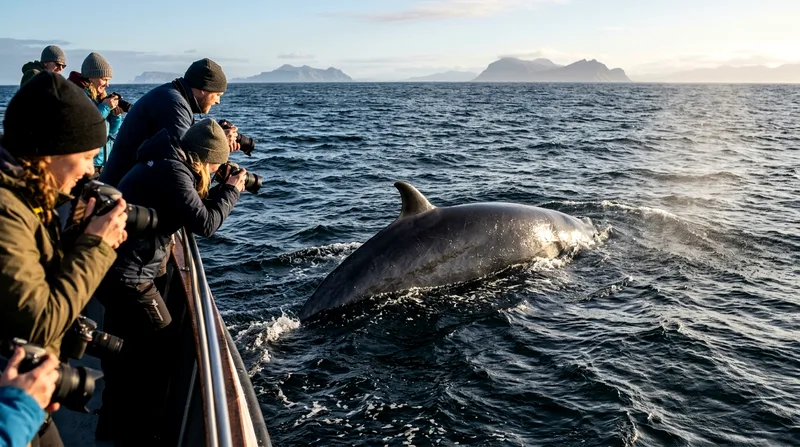
Compare classic and express whale watching tours in Reykjavik. Duration, seasickness risk, age limits, and adrenaline levels explained before you book.
8 min read · 15 Oct 2026
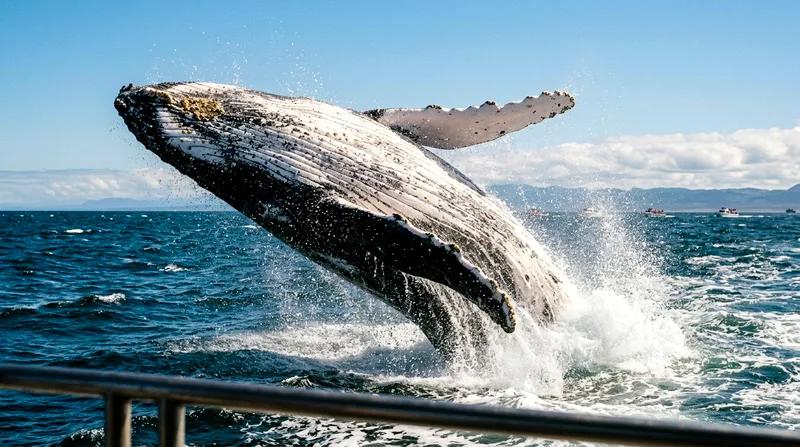
Find the best time for whale watching in Reykjavik, month by month. Learn which species appear when, sighting odds, and how to plan your trip.
9 min read · 15 Oct 2026
Book Reykjavik whale watching tickets online. Compare ticket types, child discounts, combo passes and find the cheapest way to secure your spot.
8 min read · 15 Oct 2026