Is whale watching in Reykjavik worth it? Compare sighting rates, refund policies, costs, and crowds versus Húsavík before you book.
Reykjavik Whale Tours at a Glance
Whale watching in Reykjavik attracts thousands of visitors annually, but high expectations often clash with reality — here's what you actually get. Boats leave from the Old Harbour, a five-minute walk from downtown, and head out into Faxaflói Bay, the wide body of water between the Reykjanes peninsula and the Snæfellsnes coastline. It's billed as one of the easiest ways to see a whale in the North Atlantic without leaving the capital. That ease is the entire selling point, and it's also the source of most disappointment.
The bay isn't a whale migration superhighway like some marketing suggests. It's a feeding ground that minke whales and harbour porpoises visit reliably in summer, with white-beaked dolphins and occasional humpbacks showing up less predictably. You're not getting the dense whale traffic of Skjálfandi Bay near Húsavík, and operators know this — which is why most now frame sightings as "likely" rather than guaranteed.
What you'll see and when
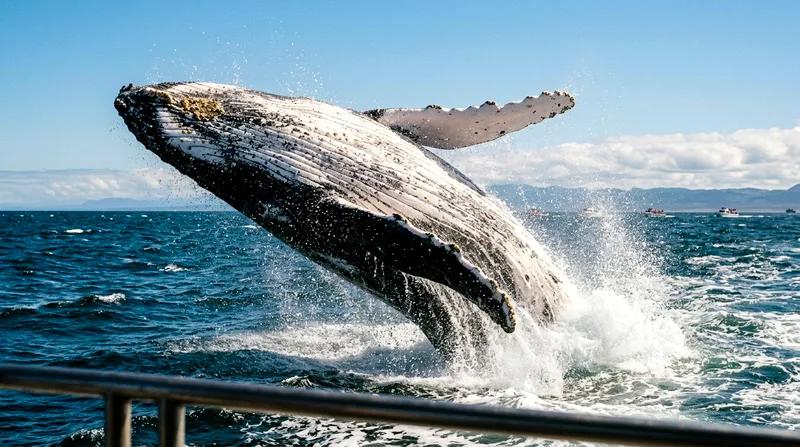
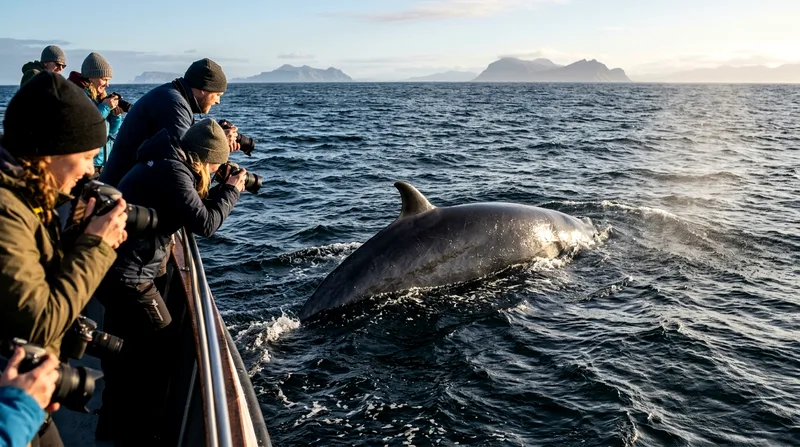
Minke whales are the headline species in Faxaflói Bay, visible roughly from April through October, with June to August being the most consistent stretch. Harbour porpoises show up year-round but are small and easy to miss from a moving boat. White-beaked dolphins appear seasonally and put on a better show when they do — they ride the bow wake, which minke whales never do. Humpback whales are a bonus sighting here, not a reliable one; they're far more common around Húsavík and Akureyri's Eyjafjörður. If a humpback or orca is your target species, Reykjavik is the wrong base entirely.
Tour duration and logistics
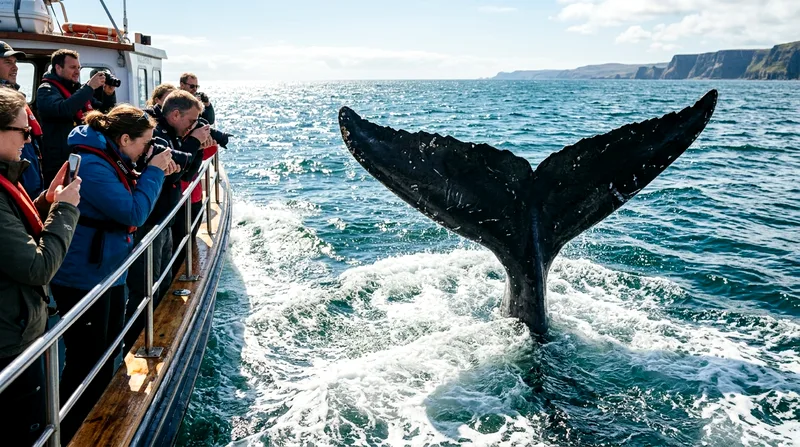
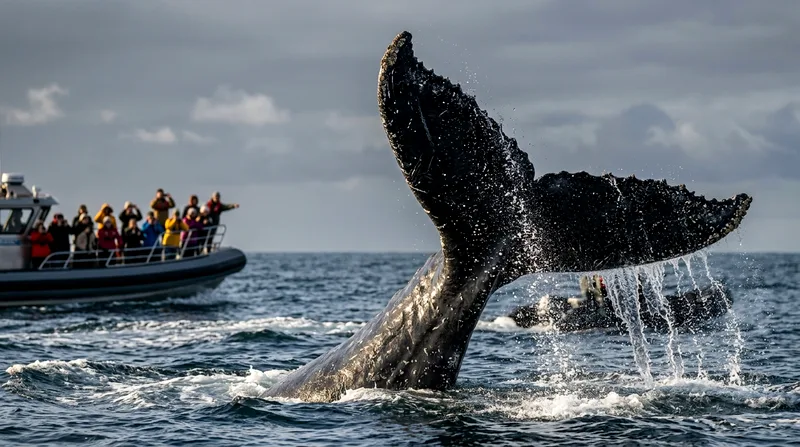
Standard tours run two and a half to three hours door-to-door, including boarding and a safety briefing. Boats range from larger catamarans with indoor seating and heating to smaller RIB (rigid inflatable boat) tours that go faster and sit lower in the water — great for photos, rough on your back in a swell. Warm overalls are provided on most boats because Faxaflói Bay is colder and windier than it looks from the harbour, even in July. Pack motion sickness tablets if you're at all unsure; the bay chops up quickly when the wind shifts, and there's no pulling over.
Sighting Rates and Guarantees Explained
This is the section most review pages gloss over, and it's the one that actually determines whether you'll feel ripped off. Operators in Reykjavik commonly publish summer sighting rates in the 80-90% range for "some cetacean," which usually means porpoises count. That's a meaningfully softer number than what Húsavík operators publish for whale sightings specifically, and the distinction matters — seeing a distant porpoise fin for two seconds is not what most people picture when they book "whale watching."
Winter sightings drop off sharply. Between November and February, rough seas cancel a noticeable share of departures outright, and even when boats go out, minke whales are less active in colder water close to shore. If you're visiting Reykjavik in winter for the northern lights, treat a whale tour as a long shot, not a given.
Realistic success rates by season
Summer (June–August) is genuinely the best window near Reykjavik, with minke whales feeding closer to shore and calmer water making for steadier boats and better visibility. Shoulder months — April, May, September — are hit or miss; you might get lucky with a quiet sea and an early feeding whale, or you might get porpoises and nothing else. Winter departures are weather-dependent and frequently rescheduled or canceled before they even leave the dock, which operators disclose but tourists rarely read closely before booking.
Refund and rebooking policies
Most Reykjavik operators offer what's marketed as a "sighting guarantee," but read the fine print — it's typically a free rebooking voucher for another tour, not a cash refund. If you see nothing, you're offered a second attempt at no extra cost, valid for a set period, often 12 months. That's useful if you're staying in Iceland for a week or more; it's close to worthless if you're on a two-day layover before flying out of Keflavik. Weather cancellations before departure are usually fully refunded, since the boat never leaves. The gap between "no refund for a no-show whale" and "full refund for a canceled trip" trips up a lot of travelers who assume the two work the same way.
Cost, Time, and Effort Comparison
Reykjavik wins decisively on convenience. You can book a morning tour, be back at your hotel by lunch, and still have the full afternoon for the Golden Circle or a swim at one of the city's geothermal pools. That's not a small thing if you've only got three or four days in Iceland and whale watching is one line item among many — Blue Lagoon, Hallgrímskirkja, a Northern Lights tour, maybe a day trip to Vik for the black sand beaches. Húsavík, by contrast, demands a half-day commitment each way if you're not already staying in North Iceland.
Price ranges and what's included
Expect to pay roughly in the same ballpark as a half-day guided tour anywhere in Iceland — most Reykjavik whale watching trips fall into a mid-range adventure-tour price bracket, with RIB boat tours usually costing more than the larger catamaran trips due to smaller group sizes. Overalls, life jackets, and a safety briefing are standard inclusions; hot chocolate and a light snack are common on the bigger boats. Binoculars are sometimes provided, sometimes not — bring your own if you have them, since shared pairs run out fast when everyone spots something at once. Always check current prices and what's included before booking, since boat type changes the number significantly.
Crowds and booking difficulty
Reykjavik's Old Harbour runs multiple departures daily in peak season, several times more than Húsavík manages, so last-minute booking is realistic even in July — try that in Húsavík during August and you may be waiting a day or two for space. The trade-off is crowding on board: the larger catamarans can carry well over a hundred passengers, which means jostling for a rail spot when something surfaces. Húsavík's smaller operation and smaller boats mean fewer people elbowing for the same view, which matters more than people expect once a whale actually shows up.
Reykjavik Versus Húsavík: Which Wins?
Húsavík, on Iceland's north coast, built its reputation on Skjálfandi Bay, a feeding ground with a much denser whale population — humpbacks in particular are common there through summer, alongside minke whales and occasional blue whales, which simply don't show up in Faxaflói Bay. It's a six-hour round trip by car from Reykjavik, or you base yourself near Akureyri and treat Húsavík as a short detour, which is how most serious wildlife travelers handle it.
Húsavík offers better whale sighting odds and species variety, but Reykjavik wins on convenience and travel time.
Reykjavik vs Húsavík whale watching compared: sightings, time, and cost
| Option | Typical summer sighting rate | Travel time from Reykjavik | Common species | Boat crowding | Best for |
|---|---|---|---|---|---|
| Reykjavik (Faxaflói Bay) | High for any cetacean, moderate for whales specifically | None — departs from city center | Minke whale, harbour porpoise, occasional humpback | High on large catamarans | Short trips, first-timers, limited schedules |
| Húsavík (Skjálfandi Bay) | Higher whale-specific sighting rate in summer | Approx. 5-6 hours by car, under 1 hour by flight to Akureyri + transfer | Humpback, minke, occasional blue whale | Lower, smaller boats | Dedicated wildlife trips, Ring Road itineraries |
| Akureyri (Eyjafjörður) | Good in peak summer | Approx. 4-5 hours by car, under 1 hour by flight | Humpback, minke | Moderate | Travelers basing in North Iceland |
Figures are typical seasonal patterns, not fixed statistics — weather and whale movement vary year to year, so confirm current conditions before booking.
Sighting advantage and travel trade-offs
The honest version: Húsavík's published summer sighting rates for whales specifically tend to run higher than Reykjavik's, and the variety of species is better — you're more likely to see a humpback breach there than anywhere near the capital. But you're paying for it in travel time. Driving from Reykjavik to Húsavík is roughly five hours each way; flying to Akureyri cuts that to under an hour but adds cost and a rental car or transfer on the other end. If you're already doing the Ring Road and passing through Akureyri or Húsavík anyway, there's no real trade-off — book there. If Reykjavik is your only base, the calculation changes.
Best fit for your priorities
If you've got a week or more in Iceland and whales are a priority, not an afterthought, build a route through North Iceland and watch from Húsavík — treat Reykjavik's harbour tour as a backup, not the main event. If you've got three or four days and a packed city-and-Golden-Circle itinerary, Reykjavik's tour is the pragmatic choice: it fits into a morning without derailing the rest of the trip. Comparing it to other Icelandic coastal towns — Vik, Hofn, Ísafjörður — none of them run comparable whale tour infrastructure at all, which is part of why Reykjavik and Húsavík dominate this particular decision.
Who Should Book and Who Should Skip
Solo travelers and couples on a tight city-break itinerary should book the Reykjavik tour without much hesitation — it's a half-morning commitment with a reasonable payoff and zero logistics beyond showing up at the harbour. Families with kids under ten should think harder about the RIB boats, which move fast and bounce hard in chop; the larger catamarans are the better, calmer choice, and some lines set minimum age or height requirements for the faster boats. Senior travelers and anyone with back or balance issues should also default to the catamaran option over the inflatable boats.
Skip it, or at least lower your expectations, if you get seasick easily and have never tested yourself on open water — Faxaflói Bay isn't sheltered the way a fjord tour might be, and there's no stopping the boat early once you're a half hour out. Skip it too if your whole reason for visiting Iceland involves a serious wildlife photography goal; you'll be happier flying up to Akureyri and working Skjálfandi Bay properly, or combining it with a Húsavík whale museum visit while you wait for weather. And if you're only in Reykjavik on a cruise stopover of a few hours, check the tour's total duration against your ship's departure time carefully — a delayed return due to weather has stranded more than one cruise passenger at the dock.
Compare current boat tours and prices before you book, since boat type and season both move the number more than most people expect.
Frequently asked questions
What's the realistic whale sighting rate in Reykjavik?
Operators commonly advertise 80-90% success for "some cetacean" in summer, but that figure usually includes harbour porpoises, which are small and easy to miss. The rate for whales specifically, especially minke whales, is lower and drops further outside June-August. Treat the headline percentage with some skepticism and ask what counts as a "sighting" when you book.
Do whale watching tours offer money-back guarantees?
Not usually in cash. Most Reykjavik operators offer a free rebooking voucher if no whale is spotted, valid for a limited period, often around 12 months. Weather cancellations before departure are typically refunded in full since the boat never sails. If you're only in Iceland for a day or two, a rebooking voucher is close to useless — factor that into your decision.
Is Húsavík really better for whale watching than Reykjavik?
For sightings specifically, yes — Skjálfandi Bay has a denser whale population and more humpback activity than Faxaflói Bay near Reykjavik. The trade-off is travel time: roughly five to six hours each way by car from Reykjavik, or a short flight to Akureyri plus a transfer. If whales are your top priority and you have the days to spare, Húsavík wins outright.
How long does a typical Reykjavik whale tour take?
Most standard tours run two and a half to three hours total, including boarding, a safety briefing, and the return to the Old Harbour. Faster RIB boat tours can be shorter but cover more water; larger catamaran tours take a bit longer and include indoor seating and sometimes hot drinks.
What's the best season for whale watching near Reykjavik?
June through August gives the most consistent results, with minke whales feeding closer to shore and calmer seas improving visibility. Shoulder seasons (April-May, September) are inconsistent, and winter departures face frequent weather cancellations with noticeably lower whale activity close to the city.