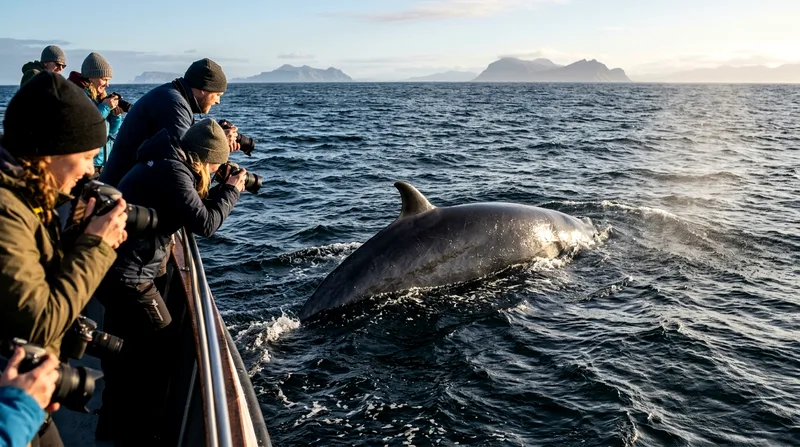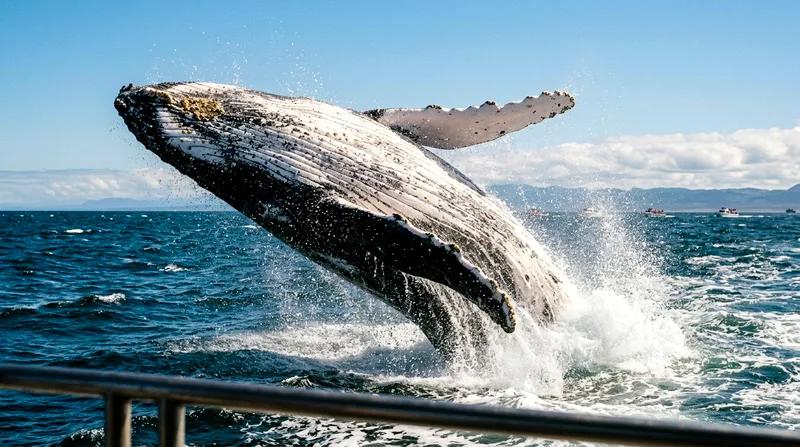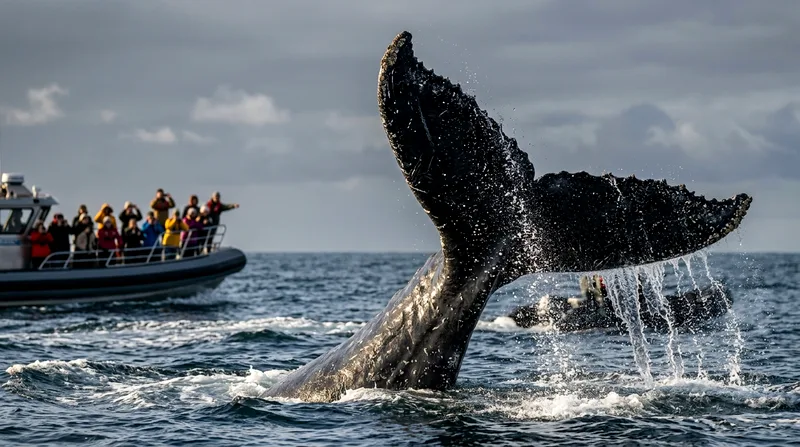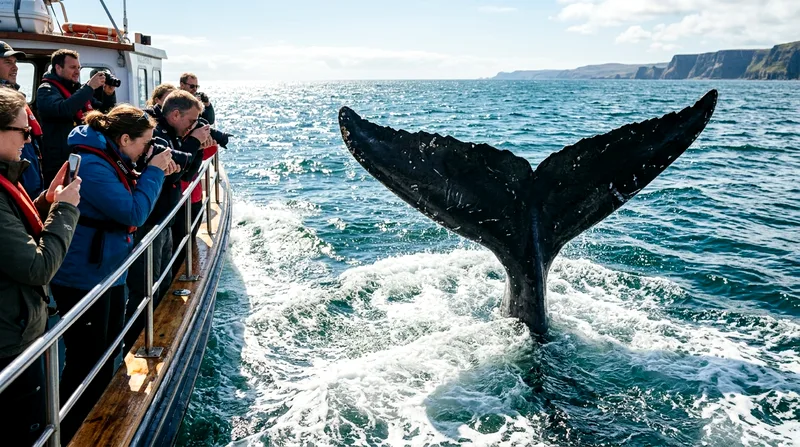
Book Reykjavik whale watching tickets online. Compare ticket types, child discounts, combo passes and find the cheapest way to secure your spot.
What is a Reykjavik whale watching ticket?
A Reykjavik whale watching ticket is your seat on a boat departing from the Old Harbour (Reykjavik Port) out into Faxaflói Bay, where humpback whales, minke whales and white-beaked dolphins feed for much of the year. It's not a single standardized product — ticket types vary by boat (classic diesel vessel vs. rigid inflatable boat, or RIB), tour length, and what's bundled in, which is exactly why comparing options before booking matters.
Reykjavik is the easiest place in Iceland to do this. You don't need a car, the harbour sits a 10-15 minute walk from most downtown hotels, and multiple departures run daily between roughly April and October, with reduced schedules in winter. Compare that to Husavik in the north, long marketed as Iceland's whale watching capital with higher sighting rates for humpbacks — it's a better bet for dedicated whale enthusiasts, but it's a 5-6 hour drive from Reykjavik, so it only makes sense if you're already touring the north. For a short city break, Reykjavik's convenience wins.
A ticket typically buys you a fixed-length trip (2.5 to 3.5 hours for classic tours, 1 to 2 hours for faster RIB trips), a guide narrating from the bridge or deck, and safety gear. It doesn't automatically include hotel pickup, food, or guaranteed sightings — those are separate line items or entirely absent, and that last point trips up a lot of first-timers who assume a ticket is a sighting guarantee. It isn't.
Ticket types and what's included
Most companies sell three broad categories: classic boat tours, RIB (speedboat) tours, and combo tickets that pair whale watching with another activity, usually a puffin-viewing detour to Lundey or Akurey islands between May and August. Each has a different feel and a different price bracket, and picking the wrong one for your group is the most common booking mistake I see travelers make.
Classic tours use larger, more stable boats with indoor seating, a small snack bar on some vessels, and overall suits, which cuts down on seasickness risk for families and older travelers. RIB tours are faster, bumpier, and get you closer to the water — exciting for younger, more adventurous travelers, but genuinely rough for anyone with a bad back or motion sensitivity. If you're traveling with young kids or grandparents, skip the RIB option; it's not worth the discomfort for a marginal increase in excitement.
Standard tour inclusions and exclusions
A standard classic boat ticket generally includes: the boat trip itself (2.5-3.5 hours), a warm flotation suit (essential — Faxaflói Bay is cold even in July), a guide who points out wildlife and explains behavior, and basic safety briefing. It usually excludes hotel pickup and drop-off (sometimes offered as a paid add-on for a few euros), food and hot drinks beyond a simple tea or cocoa offered on some boats, and photos — if you want professional shots, you're relying on your own phone or camera. Don't expect wifi or bathrooms on every vessel; smaller RIBs often have neither.
Premium and combo ticket options
Combo tickets bundling whale watching with puffin viewing are popular between May and August, since puffins nest on nearby islands and the detour adds maybe 30-45 minutes to the trip. These cost more than a standalone whale tour but less than buying two separate tickets, which makes sense if you specifically want puffins and are visiting outside late August (by then, most puffins have left for the open sea). Some operators also sell premium tickets with smaller passenger caps and better deck access — worth it for photographers, overkill for most families. I'd treat these as genuinely optional rather than a must-book upgrade.
Comparing ticket options and prices
Reykjavik whale watching prices generally fall between roughly 8,000-13,000 ISK (approximately €55-90 or $60-95) for adults on a standard classic tour, with RIB tours often priced slightly higher due to smaller group sizes and faster boats. Combo puffin-and-whale tickets typically add another 20-40% onto the base whale watching price. These figures shift with fuel costs and season, so always check the live price on the operator's site or booking platform before paying — don't rely on screenshots or old blog posts, including this one.
Classic boat tours offer the best value and comfort for most travelers, while RIB and combo tickets suit specific priorities like speed or puffin sightings.
Reykjavik whale watching ticket types compared by price, duration and best fit
| Ticket Type | Approx. Adult Price (ISK) | Duration | Best For |
|---|---|---|---|
| Classic boat tour | 8,000-11,000 | 2.5-3.5 hours | Families, seniors, first-timers |
| RIB speedboat tour | 11,000-14,000 | 1-2 hours | Adventurous couples, solo travelers |
| Whale + puffin combo | 12,000-16,000 | 3-4 hours | Birdwatchers, May-August visitors |
| Premium small-group tour | 13,000-17,000 | 2.5-3 hours | Photographers, special occasions |
Typical published price ranges in ISK per adult; always confirm current rates and child discounts on the official booking site before purchasing.
Adult vs child and family pricing
Most companies offer a child discount rate, commonly for ages 7-15, at roughly 50% of the adult price, with children under 6 or 7 often sailing free (though usually without a guaranteed seat, since babies and toddlers may need to sit on a parent's lap). Family packages bundling two adults and two children at a reduced combined rate exist with some operators but aren't universal — if you don't see one listed, it's often cheaper to book each ticket at the individual child/adult rate than to assume a bundled family deal exists. Always check the age cutoffs carefully; a child who turns 16 the week of your trip may get bumped to adult pricing.
Seasonal price variations
Summer (June-August) sees the highest demand and, often, the highest prices, plus the widest range of departure times — sometimes four or five sailings a day. Winter tours run less frequently, occasionally just once daily or a few times a week, and prices can dip slightly, but cold, rough seas mean more weather-related cancellations. Shoulder months like May and September often strike the best balance: reasonable prices, decent sighting odds, and fewer crowds on the boat.
Where and how to book tickets
Reykjavik whale watching tickets are sold directly on operator websites, through the Reykjavik tourist information desks, and via general Iceland tour-booking platforms that aggregate multiple operators. All three work, but they're not equivalent in terms of flexibility and price transparency.
Official booking channels
Booking directly through an operator's own website typically gives you the clearest cancellation policy and direct customer service if your tour gets rescheduled due to weather — a real possibility in Iceland even in summer. Tourist information kiosks around the Old Harbour and downtown can book same-day or next-day tours, useful if you're deciding last-minute, but you lose the ability to compare prices across companies easily. Third-party booking platforms let you compare several operators' departure times and prices side by side, which is genuinely useful for a first visit when you don't know one company from another. Whichever channel you use, read the cancellation terms before confirming — policies differ on how close to departure you can get a full refund.
Advance booking benefits
Booking 2-4 days ahead in peak summer is a sensible minimum; popular afternoon departures can sell out, especially in July. In winter, you can often book a day or two ahead, since there are fewer tourists but also fewer sailings, so the math balances out. If your schedule is fixed — say, you're only in Reykjavik one day between a South Coast trip and a flight home — book as early as your itinerary allows, even a few weeks out, since weather cancellations mean you want buffer days if possible. Compare current whale watching boat tours and prices before you book, since fleet schedules and seat availability shift week to week.
Is whale watching worth the cost?
For most visitors, yes — but it depends on what else is competing for your time and budget in Reykjavik. A 3-hour tour costing around €70-90 per adult is a meaningful chunk of a daily travel budget, comparable to a full day's car rental or a decent dinner for two. Weigh it against other Reykjavik activities: the Blue Lagoon costs more, a Golden Circle day tour costs roughly similar, and a swim at one of the city's geothermal pools costs a fraction of the price.
Value for different traveller types
Families get strong value here because it's one of the few Reykjavik activities genuinely engaging for kids without requiring hiking stamina or glacier gear. Couples looking for a relaxed half-day activity between city sightseeing also do well with it. Mountaineers and hikers focused on reaching Landmannalaugar or climbing near Akureyri might find three hours on a boat a lower priority than time on trails — for that crowd, I'd suggest treating whale watching as a low-key rest-day activity rather than a highlight. Senior travelers generally do fine on classic boats; the RIB option is the one to skip.
Budget alternatives and tips
If cost is the real constraint, look at shoulder-season sailings (May, September) where prices often dip slightly, or book directly rather than through a hotel concierge who may add a markup. Traveling onward to Akureyri or Husavik anyway? Whale watching tours there sometimes run slightly cheaper than Reykjavik's, partly due to lower overhead and more direct access to feeding grounds — though you trade city convenience for a long drive. There's no reliable "free" alternative in Reykjavik itself; occasional whale sightings happen from shore near the harbour, but they're rare and not something to plan a trip around.
Frequently asked questions
How much do Reykjavik whale watching tickets cost?
Adult tickets for a standard classic boat tour typically run approximately 8,000-11,000 ISK (around €55-75), with RIB speedboat tours and combo puffin packages priced higher, often up to 16,000-17,000 ISK. Prices shift by season and operator, so confirm the current rate on the official booking page before paying.
Are there discounts for children and families?
Most operators discount tickets for children roughly aged 7-15 by about 50% off the adult rate, and children under 6 or 7 often ride free, though usually without a guaranteed seat. Dedicated family bundle pricing exists with some companies but isn't universal — check each operator's own child age cutoffs since they vary.
Can I get a refund if whales aren't spotted?
Many Reykjavik operators offer a free repeat voucher if no whales are sighted, rather than a cash refund — essentially a rain check for another sailing. Policies differ by company, so read the specific refund and "no-sighting" terms on the booking page before you buy, especially if you're only in Reykjavik for one day and can't use a reschedule voucher.
How far in advance should I book tickets?
Book 2-4 days ahead for summer (June-August) departures, since popular afternoon slots can sell out in peak weeks. In winter, a day or two ahead is usually fine given fewer sailings and lower demand, but build in flexibility since weather cancellations are more common in colder months.
What's included in a whale watching tour ticket?
A standard ticket includes the boat trip itself, a warm flotation suit, and a guide narrating wildlife sightings, but typically excludes hotel pickup, food, and professional photos unless specifically advertised. Always check the operator's inclusions list, since RIB tours sometimes skip amenities like indoor seating or a bathroom that classic boats provide.