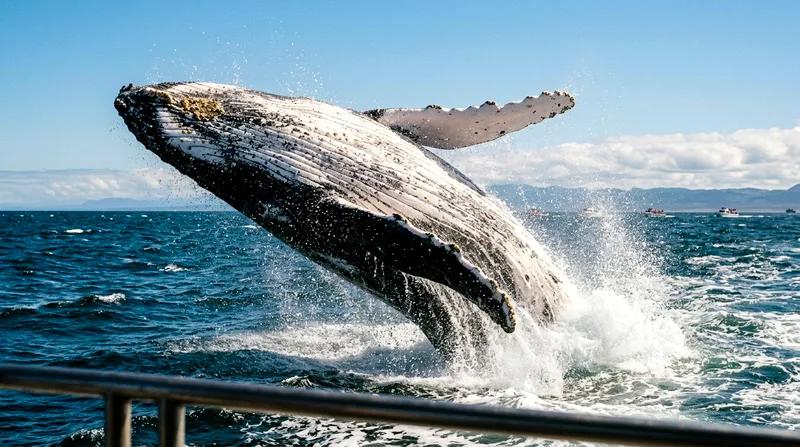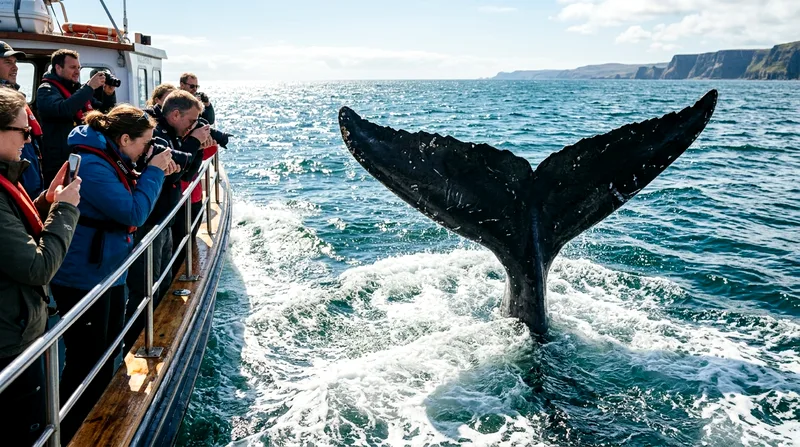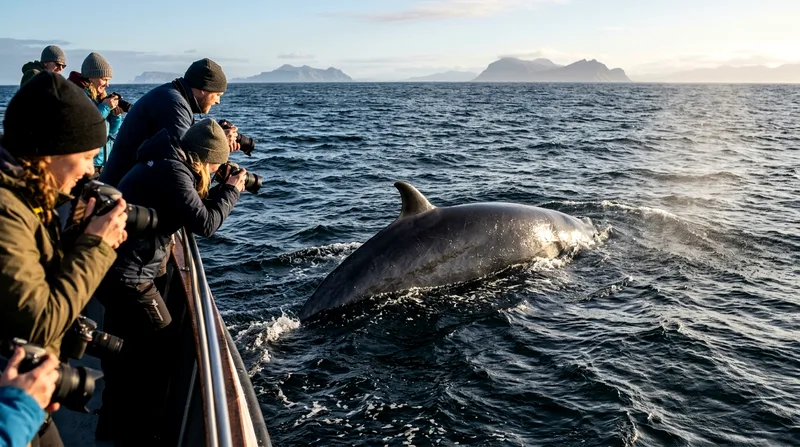
Compare classic and express whale watching tours in Reykjavik. Duration, seasickness risk, age limits, and adrenaline levels explained before you book.
Classic vs Express: Quick Comparison
Reykjavik's whale watching scene splits into two distinct experiences, and the choice matters more than most operators let on. Classic tours run on larger, slower boats that cruise out from Reykjavik Old Harbour into Faxaflói Bay, giving you time, shelter, and a reasonable shot at spotting humpback whales, minke whales, or white-beaked dolphins without feeling like you're in a washing machine. Express tours — almost always on RIB boats, the inflatable-hulled speedboats built for speed — cover the same waters faster, hit open sea sooner, and turn the whole outing into something closer to a thrill ride with wildlife as a bonus.
Neither format is objectively "better." A RIB boat gets you further out in less time, which matters if whales have been sighted further from shore that week. A classic boat gives you a loo, a covered deck, and the chance to walk around rather than being strapped into a single seat for the entire trip. If you've ever compared fast boat tours elsewhere — Tromsø's RIB safaris or the open fjord cruises out of Bergen — the trade-offs here are similar: speed and exposure versus comfort and patience.
Classic boats trade speed for comfort and longer whale-watching time, while RIB boats trade comfort for speed and a shorter, punchier outing.
Classic vs express whale watching Reykjavik tours compared by duration, comfort, and who they suit
| Tour Type | Typical Duration | Boat Type | Seasickness Risk | Min. Age | Best For |
|---|---|---|---|---|---|
| Classic | 2.5-3.5 hours | Large covered boat | Low-moderate | Often none or very young | Families, seniors, first-timers |
| Express (RIB) | 1-1.5 hours | Open RIB speedboat | Moderate-high | Usually 6-8 years minimum | Couples, thrill-seekers, time-pressed travelers |
Typical figures; exact durations, age limits, and prices vary by operator and season, so check before you book.
Boat type and speed differences
Classic whale watching boats in Reykjavik typically range from 60 to 100 feet, carry anywhere from 50 to 150 passengers, and cruise at modest speeds, generally under 15 knots. They have indoor cabins, often a small snack bar, and enough deck space to move around and find a clear sightline. RIB boats, by contrast, seat 12 to 30 passengers, sit low in the water, and can hit 30+ knots. There's no indoor cabin — you're in a wetsuit-style flotation suit the whole time, gripping a handle as the boat bounces over wake and swell. If you get queasy on a ferry crossing like the one from Hofn-adjacent routes or the Vik coastal boat trips, the RIB will test you far more than a classic boat ever would.
Cost and value overview
Classic tours tend to run a bit cheaper and last longer, which usually makes them the better per-hour value, particularly for families buying multiple tickets. Express RIB tours charge a premium for the shorter, faster format — partly for the suit rental, partly because the boats carry fewer passengers per trip. Neither price is fixed across the industry, and they shift by season, so compare current prices and departure times before booking rather than relying on last year's numbers. What stays consistent is the shape of the trade-off: classic tours cost less per hour on the water, RIB tours cost more for a shorter, more intense experience.
Duration and Time Commitment
Time is often the deciding factor, more than comfort or cost. If you've got a packed Reykjavik itinerary — Golden Circle one day, Blue Lagoon the next, maybe a day trip toward Vik or the South Coast — the hours you spend on a boat matter.
Classic tour length and schedule
Classic whale watching tours from Reykjavik Old Harbour typically run 2.5 to 3.5 hours door to door, including boarding, safety briefing, the cruise out to Faxaflói Bay, time searching for whales, and the return. Departures usually run multiple times a day during peak season (roughly April through September), with fewer sailings in winter. The longer runtime means more patience is needed, but also more time on the water where whales might actually surface — a real consideration, since sightings are never guaranteed anywhere, including well-known spots like Húsavík further north, which markets itself as Iceland's whale capital.
Express tour length and schedule
Express RIB tours are built for people who don't want to commit half a day. Most run 1 to 1.5 hours total, with less time spent cruising to the sighting grounds because the boats move faster. That's appealing if you're squeezing whale watching between a morning flight into Keflavik and an afternoon city walk, but it also means less buffer time if whales are scarce that day — a slower classic boat can loiter and search longer, while a RIB tour's tight schedule leaves less room to wait things out.
Seasickness Risk and Comfort
Seasickness is the single biggest regret factor reported by whale watching visitors, and it's almost entirely predictable if you understand what each boat type actually does to your body.
Wave exposure and boat stability
Classic boats, with their size and weight, ride swells more smoothly — they dampen the up-and-down motion rather than amplifying it. RIB boats do the opposite: speed over waves creates sharp, repeated jolts, and open-air exposure means wind and cold add to the disorientation that triggers nausea. If you've been fine on a car ferry but queasy on a jet boat before, assume the RIB will replicate that feeling. Taking an anti-nausea tablet (like dimenhydrinate) 30-60 minutes before boarding is standard advice from most operators, and it matters more for RIB passengers than classic ones.
Comfort features and shelter
Classic boats offer an indoor cabin with seating, a toilet, sometimes hot drinks for sale, and the option to step outside only when whales are spotted. That matters in Iceland's wind, which can make even a mild summer day feel raw on open water. RIB tours provide flotation suits that keep you warm and dry, but there's no retreating indoors if you're cold, tired, or simply done — you're committed for the full run. For anyone with mobility issues, back problems, or a low tolerance for bouncing, the RIB format is a genuine risk, not just a discomfort.
Age Limits and Family Suitability
Operators set age limits for good reason — RIB boats put real physical strain on small bodies, while classic boats are built for a broader range of ages and mobility levels.
Minimum age requirements
Classic whale watching boats in Reykjavik commonly accept children of any age, sometimes with reduced fares for toddlers, since the ride is gentle enough for strollers and infants to handle. RIB boats almost universally set a minimum age, commonly 6 to 8 years old, due to the suit sizing and the physical jolt of speed over waves. Some operators push the RIB minimum higher, closer to 10 or 12, depending on sea conditions that day. Always check minimum age and weight requirements directly before booking, since they vary by company and can change with weather forecasts.
Best age groups for each
Classic tours suit the widest range — from infants through grandparents — because the environment is forgiving. RIB tours suit fit teenagers through middle-aged adults who want an adrenaline edge, but they're a poor match for very young children, those with heart or back conditions, and most people over 70 who aren't regular thrill-seekers. If your travel party spans three generations, a classic boat is usually the only format that works for everyone at once.
Who Should Choose Which Tour
Matching the tour to the traveler matters more than matching it to the season — though season plays a role too, with humpback and minke sightings generally strongest from June through August, and white-beaked dolphins visible year-round in Faxaflói Bay.
Best for families with young children
Classic boats are the only sensible choice here. The indoor cabin gives restless kids somewhere to go, the toilet is non-negotiable with young children on a multi-hour outing, and the slower pace means less risk of a meltdown from cold or motion sickness. Skip the RIB entirely if traveling with anyone under 8 — most operators won't let you book it anyway, and even where allowed, it's not worth the risk of a miserable, tear-filled hour on open water.
Best for couples and thrill-seekers
Couples without kids, especially those wanting a shorter, more memorable adrenaline hit, tend to prefer the RIB format — it feels more like an activity than a sightseeing cruise, closer in spirit to the fast-boat excursions you'd find around Ísafjörður's fjords. The shorter runtime also frees up the rest of the day for a Reykjavik city walk or a Golden Lagoon soak afterward.
Best for seniors and comfort-focused travelers
Senior travelers and anyone prioritizing comfort over adrenaline should stick with classic boats without hesitation. The ability to sit indoors, avoid repeated jolting, and use a bathroom mid-trip outweighs any time saved by going faster. If mobility is a concern, ask the operator about boarding — some classic boats have steps rather than ramps at Reykjavik Old Harbour, so confirm accessibility when booking rather than assuming.
Final Verdict
Pick the classic tour if you're traveling with children, seniors, or anyone unsure how they'll handle open water — the extra hour buys comfort, shelter, and a far lower chance of regret. Pick the express RIB tour if you want a short, high-energy outing, you're reasonably fit, and you've got a tight schedule that doesn't allow for a half-day boat trip. What I wouldn't recommend: booking a RIB tour for a mixed group that includes young kids or anyone with a weak stomach, just because it looks more exciting in photos — the mismatch shows up fast once you're ten minutes offshore in Faxaflói Bay with no way to turn back early. Whichever you choose, dress for the North Atlantic rather than for Reykjavik's streets: thermal layers, waterproof outer layer, and a hat, even in July.
Frequently asked questions
Which whale watching tour is better for young children?
Classic tours are the clear choice for young children. They allow infants and toddlers aboard, offer an indoor cabin to escape wind and cold, and include a toilet — none of which RIB boats provide. Most RIB operators set a minimum age around 6 to 8 regardless of parental preference.
Do express whale watching tours have higher seasickness rates?
Yes, generally. RIB boats move faster and sit lower in the water, so they transmit more of the wave motion directly to passengers, with less time to acclimate. Classic boats' size and indoor cabin reduce both the physical jolting and the visual disorientation that trigger nausea. Taking an anti-nausea tablet before boarding helps on either tour, but it's more commonly advised for RIB passengers.
How much longer is a classic whale watching tour?
Classic tours typically run 2.5 to 3.5 hours total, roughly double the length of most express RIB tours, which usually last 1 to 1.5 hours. The extra time on a classic boat goes toward a slower cruise out to the sighting grounds and more patient searching once there.
Can seniors handle express RIB boat tours?
Some fit, healthy seniors manage RIB tours without issue, but the repeated jolting over waves and the lack of indoor shelter make it a poor match for anyone with back, neck, or heart conditions. Most seniors report a far more enjoyable experience on classic boats, where they can sit, move around, and step inside if the wind picks up.
What's the price difference between classic and express tours?
RIB tours typically cost more per hour than classic tours, since they carry fewer passengers and include flotation suit rental, despite running a shorter route. Classic tours tend to offer better value for the time spent on the water. Exact prices shift by operator and season, so compare current listings before booking rather than assuming a fixed rate.