Compare free tip-based walking tours with paid themed walks in Reykjavik. Find the right guide for history, food, culture and more before booking.
Who Each Walking Tour Type Suits
Reykjavik covers so little ground that nearly everyone can walk the core of it — the distance from Hallgrímskirkja down Laugavegur Street to the Old Harbour is roughly 1.5 kilometers, flat enough for most fitness levels. That compactness is exactly why a reykjavik walking tour makes more sense here than in sprawling capitals like Bergen, where hills and ferry connections complicate things. The real decision isn't whether to walk, but which kind of walking tour matches your interests and patience for groups.
Families with children under ten generally do better with shorter, themed walks of 60–90 minutes rather than the standard 2.5-hour free tours, since younger kids lose focus on long historical narration. Couples looking for a shared activity without a big group often prefer paid small-group or private options. Senior travelers should look specifically at tour descriptions mentioning pace and seating breaks — not all guides build in rest stops, and a 2.5-hour walk without one can be rough on knees and hips, especially on uneven cobblestones near Tjörnin Pond.
Solo travelers and budget-conscious backpackers are the classic audience for free walking tours — low commitment, built-in social element, easy to join same-day. World travelers who've already done free walking tours in a dozen other cities often find Reykjavik's version thinner on content simply because the city's recorded history is shorter and less eventful than, say, Bergen's Hanseatic trading past, so guides lean harder on Icelandic folklore and Settlement-era stories to fill the time.
Budget travelers and casual explorers
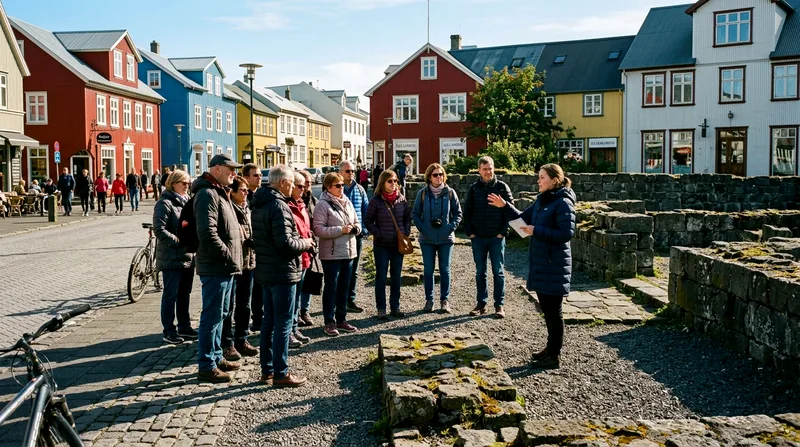
If you're traveling on a tight budget or just want a two-hour overview before deciding what to explore on your own, a free walking tour covering the city center, Laugavegur, and the Old Harbour area is the pragmatic choice. You pay what you think it's worth at the end, typically in the range locals and guides describe as 2,000–4,000 ISK per person, though there's no fixed price — that's the whole point of the tip model. The trade-off is depth: these tours are built to appeal broadly, so expect general history, some Viking and Settlement references, and pointers to where to eat or shop rather than deep dives into any single topic. Fine for orientation, thin if you want real substance.
History and culture enthusiasts
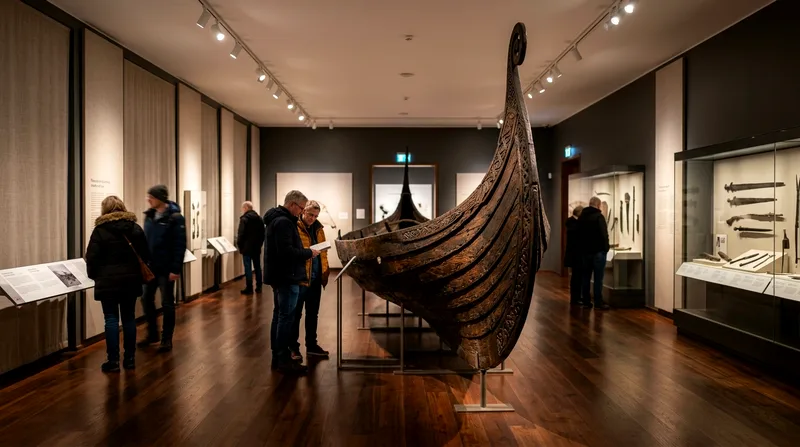
If you want more than a surface pass at Reykjavik's past, pick a paid historical walking tour, ideally one that includes or pairs with entry to the Settlement Exhibition or the National Museum of Iceland. These tours tend to run longer — often 2 to 3 hours — and are led by guides with actual training in Icelandic history rather than seasonal staff reciting a script. You'll get into specifics: how the 1915 fire reshaped the city center, why the turf-house layout at the Settlement Exhibition matters, how Reykjavik grew from a farm settlement to a capital of under 140,000 people. Expect to pay more than a free tour's typical tip, but you're buying expertise, not just a walking route.
Free vs Paid Walking Tours Compared
The free versus paid question is the single biggest decision point for anyone booking a reykjavik walking tour, and it's worth being honest about what each model actually delivers. Free tours aren't really free — they're commission-and-tip funded, which shapes everything from group size to how much the guide can personalize the experience. Paid tours charge upfront, which filters for smaller groups and more specialized guiding, but locks you into a schedule and a fixed cost regardless of how the tour turns out.
Neither model is objectively better; they solve different problems. A free tour solves "I want a cheap overview today." A paid tour solves "I want depth on a specific topic with a guide who can actually answer follow-up questions." Where people get it wrong is expecting free-tour depth from a free-tour price, or expecting paid-tour intimacy in a 25-person group — check the stated group size before you book, not after.
Free tours cost less and need no booking but deliver a general overview in larger groups, while paid themed tours cost more for smaller groups and specialist depth.
Reykjavik walking tour types compared: duration, group size and cost
| Tour Type | Typical Duration | Group Size | Cost Model | Best For |
|---|---|---|---|---|
| Free city walking tour | 2–2.5 hours | 15–30 (peak season) | Tip-based | Budget travelers, first orientation |
| Paid historical walk | 2–3 hours | 8–15 | Fixed price | History enthusiasts, couples |
| Food walking tour | 2.5–3.5 hours | 6–12 | Fixed price, often includes tastings | Couples, solo food-curious travelers |
| Folklore/ghost walk | 1.5–2 hours | 10–20 | Fixed price | Families with older kids, casual groups |
| Private/custom walk | Flexible, 1.5–4 hours | 1–6 | Fixed price, higher per person | Seniors, mobility-conscious travelers, small families |
Group sizes and durations vary by season and operator; check current listings for exact figures before booking.
Tip-based model and group dynamics
Free walking tours typically run as open enrollment — show up at the meeting point, usually near Ingólfstorg square or the Reykjavik City Hall, no advance payment required. Group sizes vary widely by season: expect 10–15 people in shoulder months and sometimes 25–30 at the peak of summer, which thins out the guide's attention and makes it harder to hear over street noise on Laugavegur. The tip-based model means guides are incentivized to keep things entertaining and move at a crowd-pleasing pace, which is good for energy but bad for anyone wanting to pause and ask detailed questions. If you're claustrophobic in crowds or traveling with a child who needs individual attention, a free tour in July is not the right environment.
Depth of content and guide expertise
Paid walking tours, by contrast, generally cap groups smaller — often 8–15 people — and guides are more likely to specialize, whether in Icelandic literature, architecture, or food history. You're also more likely to get a fixed, bookable time slot rather than a first-come queue, which matters if you're coordinating a trip with limited days in the city. The honest downside: quality still varies operator to operator, and a higher price doesn't automatically guarantee a better guide. Always check recent reviews mentioning the specific guide or route before booking, not just the overall star rating.
Tour Categories and Route Coverage
Most Reykjavik walking tours fall into a handful of categories, and knowing the route coverage helps you avoid paying twice for the same ground. General city and historical walks dominate, but food-focused, folklore/ghost-themed, and architecture-specific tours have become common enough to be worth comparing directly.
City center and historical walks
The standard route threads through the city center: starting near Hallgrímskirkja or Ingólfstorg, down Laugavegur Street, around Tjörnin Pond, and finishing at the Old Harbour. Some extend to include Perlan on the hill above the city, though that's a notable detour — Perlan sits roughly 2.5 km from the center, so tours including it usually add transport or treat it as a separate add-on rather than a walking leg. This category suits first-timers who want the geography of the city to click before they explore independently. The downside is repetition: if you've already wandered Laugavegur on your own, a second pass with a guide covering the same stretch can feel redundant unless the narration adds real value.
Food and local culture tours
Food walking tours typically run 2.5–3.5 hours and stop at 4–6 small venues — a mix of cafés, a fish market stall, a bakery, sometimes a bar for a taste of Icelandic spirits. These are almost always paid, since they involve covering tasting costs, and group sizes stay small by necessity (often under 12) because venues can't accommodate large crowds. They suit couples and solo travelers more than families with young kids, partly because of alcohol tastings and partly because the pace — lingering at each stop — doesn't hold children's attention. Compared to a general historical walk, you'll cover less ground geographically but get a much stronger sense of daily life and local food culture, including fermented shark and rye bread baked in geothermal heat, which are the two things guides almost always mention.
What to Look for When Booking
Before you commit to any reykjavik walking tour, read past the headline description. The details that actually affect your experience — group size caps, what's included, cancellation terms — are usually buried lower in the listing than the marketing copy.
Group size and pace considerations
Ask or check for a stated maximum group size; listings that don't mention one are often the large free tours running 20+ people in peak season. If you have mobility concerns or are traveling with young children, look for language around pace and stops — a tour that explicitly builds in breaks near Tjörnin Pond or the harbor benches is more manageable than one marketed purely on distance covered. Mountaineers and hikers used to fast trekking paces sometimes find city walking tours frustratingly slow; if that's you, a self-guided walk using a map from the tourist information center near the harbor might suit you better than a structured group tour.
Inclusions and cancellation policies
Check exactly what's included — some food tours bundle all tastings into the price, others charge extra at certain stops. Historical tours sometimes include museum entry (to the Settlement Exhibition, for instance) and sometimes just point you toward it afterward. Cancellation policies vary: many paid tours allow free cancellation up to 24 hours ahead, but weather-dependent outdoor add-ons may have stricter terms. Given Reykjavik's wind and rain can shift fast, avoid booking anything non-refundable more than a day or two in advance — compare current tour listings and cancellation terms before you book.
When to Book Your Walking Tour
Seasonality matters more in Reykjavik than in most European capitals because daylight swings so dramatically. In June, you'll have nearly 24 hours of daylight, meaning tour operators can run multiple departures and even evening slots. By December, daylight might run only 4–5 hours, which compresses scheduling to a narrow midday window and makes outdoor walking colder and, on bad days, genuinely unpleasant with horizontal sleet.
Free walking tours generally run year-round but reduce frequency in winter — sometimes to once daily instead of two or three departures. Paid tours tend to be more reliable in winter since smaller groups are easier to manage on icy pavement, but confirm the operator provides or recommends proper footwear; Reykjavik sidewalks ice over and the city doesn't salt every street. Summer brings the opposite problem — overcrowding on Laugavegur during peak cruise ship days, when free tours can swell past comfortable size. If you're visiting between June and August, book paid tours a few days ahead; free tours you can usually still join same-day, just arrive 10–15 minutes early to secure a spot near the front where you can actually hear the guide.
Frequently asked questions
Are free walking tours in Reykjavik really free?
No upfront fee is charged, but guides work for tips, so you're expected to pay what you felt the tour was worth at the end — commonly in the range of 2,000–4,000 ISK per person. It's not mandatory, but skipping payment entirely is considered poor form given that's the guide's actual income.
How long do Reykjavik walking tours typically last?
Most general city tours run 2 to 2.5 hours covering roughly 2–3 km through the center. Food tours run longer, often 2.5–3.5 hours due to tasting stops, while folklore or themed walks can be shorter, around 1.5–2 hours.
What's the average group size on walking tours?
Free tours can range from 10 people in winter to 25–30 at summer peak. Paid themed tours are typically capped between 8 and 15 people, and private options can be as small as 1–6, which matters a lot if you want to actually interact with the guide.
Can you book walking tours last-minute in Reykjavik?
Free tours are usually join-on-the-day with no booking required, just show up at the meeting point early. Paid tours, especially food or historical walks with limited capacity, are safer to book at least a day or two ahead, particularly in June through August when demand is highest.
Do walking tours operate in winter?
Yes, though with reduced frequency — free tours may drop to one daily departure instead of two or three. Daylight hours shrink to around 4–5 hours in December, so winter tours usually run midday, and icy pavement makes proper footwear essential.