Reykjavik food tour vs self guided eating compared: total costs, portion counts, discovery value, and which option actually saves money.
Options at a Glance
Reykjavik is compact enough to eat your way across it on foot, which is exactly why the food tour vs self-guided question comes up so often. The city center runs maybe 2 km end to end, from the Old Harbour down to Laugavegur, and most of the restaurants worth caring about sit inside that stretch. That density makes both approaches genuinely viable — this isn't a case where one option is obviously impractical.
A guided food tour bundles a handful of stops into one fixed-price, fixed-schedule outing. Self-guided eating means you pick restaurants, pay per visit, and control every variable yourself. Neither is "the right answer" universally; they solve different problems. The tour solves the problem of not knowing where to go in a country where menus are in Icelandic and portion sizes don't map to what you're used to. Self-guided solves the problem of cost control and flexibility, at the expense of doing your own research.
What a guided food tour includes
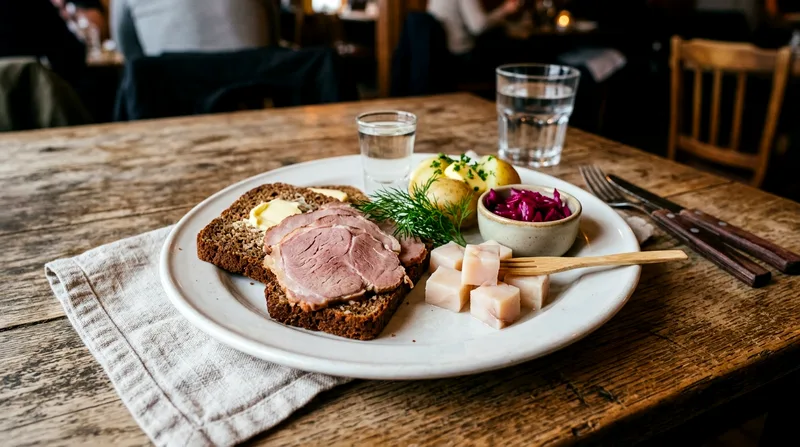
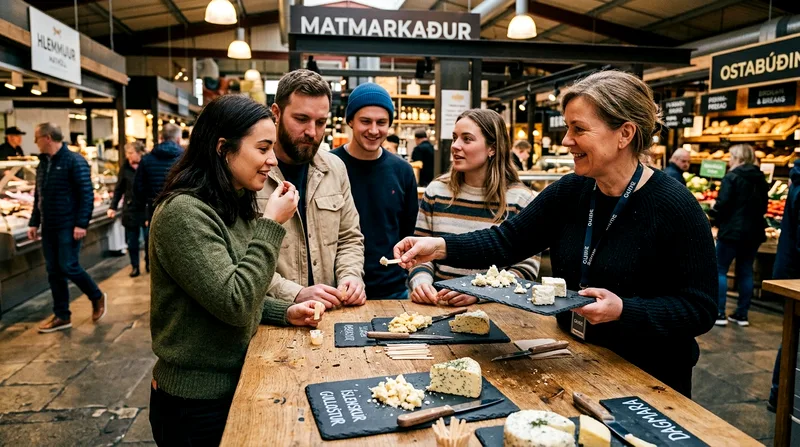
Most Reykjavik food tours run 3 to 3.5 hours and stop at 4 to 6 venues — a mix of casual eateries, a market hall stall or two, maybe one sit-down spot for lamb or fish. Pricing typically lands somewhere between roughly 15,000 and 22,000 ISK per adult (around $110–$160 USD), though you should always check current prices when booking since this shifts with group size and inclusions. Most tours include tastings rather than full entrées — expect small plates, not dinner-sized portions, at every stop. Drinks are often extra unless explicitly stated, and tips aren't expected in Iceland the way they are in the US, so don't budget for that separately. A guide walks you between stops, explains what you're eating, and fields questions about Icelandic food culture — fermented shark, skyr, lamb, langoustine — that you'd otherwise have to Google mid-bite.
Head-to-Head: Time, Cost, and Effort
This is where the decision actually gets made, so it's worth being blunt: a food tour is not a budget option, and it was never designed to be one. It's a convenience product. Self-guided eating is cheaper almost every time you run the numbers, but it costs you planning time and carries more risk of a bad meal.
Self-guided eating typically costs less per person and delivers fuller portions, while a food tour saves planning time and adds narrated context.
Reykjavik food tour vs self guided eating: cost, time, and portions compared
| Option | Typical Cost (per adult) | Time Required | Portion Size | Research Needed | Best For |
|---|---|---|---|---|---|
| Guided food tour | ~15,000–22,000 ISK | 3–3.5 hrs fixed | Tasting-sized, 4–6 stops | None | First-timers, short stays |
| Self-guided (casual) | ~6,000–10,000 ISK | 1–2 hrs flexible | Full portions | Low-moderate | Budget travelers, solo diners |
| Self-guided (mixed casual + fine dining) | ~10,000–16,000 ISK | 2–3 hrs flexible | Full portions | Moderate | Couples, longer stays |
| Self-guided (fine dining only) | 16,000+ ISK | 2–3 hrs, reservation needed | Full, multi-course | Moderate-high | Special occasion diners |
Figures are typical ranges based on common Reykjavik pricing structures; always check current prices when booking, as costs vary by season and venue.
Total spend comparison
A typical food tour for one adult costs roughly 15,000–22,000 ISK, all-in except drinks. Self-guided eating across a similar evening — say, a street food snack plus one proper restaurant meal — lands around 6,000–10,000 ISK per person if you stick to casual eateries, or 10,000–16,000 ISK if you include one fine dining course. In other words: eating two meals independently, carefully, at casual-to-mid-range places usually costs less than the tour, even before you factor in that the tour's five tasting-sized portions won't fully replace dinner. If your goal is strictly to save money eating in Reykjavik, self-guided wins on paper almost every time.
Portion count and meal structure
Food tours are built around tasting portions — small plates engineered to let you sample widely without getting full at stop two. Across 5 stops you might eat the equivalent of one and a half normal meals, not five. That's fine if you want breadth, but if you're hungry after walking around Reykjavik all day in cold wind, a tasting tour alone often won't cut it, and you'll end up grabbing something afterward anyway. Self-guided eating gives you full portions by default — you order a main course, you decide if you want dessert, you walk away full. This is a real, underdiscussed difference: tour marketing implies you'll be stuffed, but the honest experience is "satisfied and curious," not "done eating for the day."
Time investment and logistics
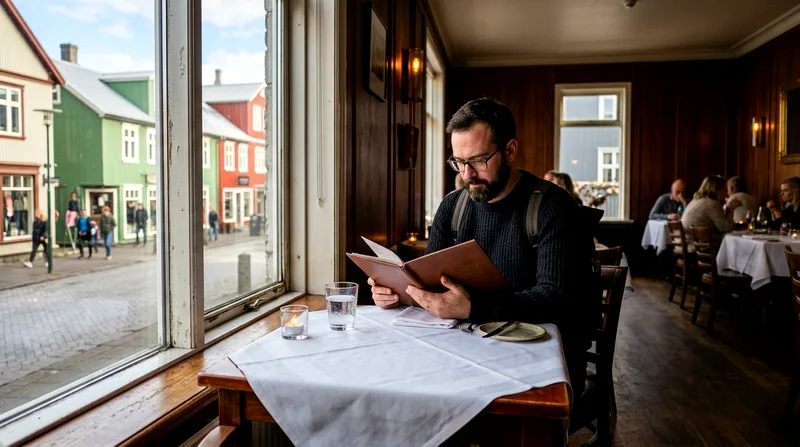
A guided tour requires zero research — you show up at a meeting point, usually near the Old Harbour or downtown, and the next 3+ hours are planned for you. Self-guided eating requires you to actually decide where to go, which for a lot of travelers after a full day of waterfalls or glacier hikes is the last thing they want to do. Budget 15–20 minutes of research per meal if you're self-guiding seriously — checking a map, reading a couple of reviews, confirming it's not a tourist-trap price trap near Laugavegur. That's a real cost, just not a monetary one.
Discovery and Crowds: What You Get
Cost isn't the only variable. What you learn, and who else is standing next to you while you eat it, matters too — and this is where the two approaches diverge most sharply.
Local knowledge and underrated spots
A good guide tells you why Icelanders eat fermented shark (necessity, historically, not novelty), which market hall stall has the best langoustine soup, and which "traditional" restaurant near the harbor is actually aimed entirely at cruise passengers. That context is hard to replicate from a blog post in twenty minutes. On the other hand, plenty of self-guided travelers find genuinely good, lesser-known restaurants simply by walking two streets back from the main tourist drag and reading posted menus — Reykjavik's downtown is small enough that wandering works. You lose the narration, but you gain the ability to linger somewhere you stumbled into and actually liked.
Peak times and tourist density
Food tours often run during off-peak hours — late afternoon or early evening — specifically to dodge dinner rush crowding at popular stops, which is a genuine logistical advantage. Self-guided diners who show up at 7 or 8 pm at a well-known spot on Laugavegur during July or around Christmas markets will wait, sometimes 30–45 minutes without a reservation. If you're self-guiding, book ahead for anywhere popular, or eat early (5:30–6:30 pm) or late (after 9 pm) to skip the crush.
Who Should Choose Which Option
Neither option is universally smarter — it depends on your trip style, your patience for research, and how much you actually care about food as the main event versus a fuel stop between glacier hikes and Golden Circle stops.
Best for guided tours
First-time visitors with only one or two nights in Reykjavik benefit most — you get a crash course in Icelandic cuisine without wasting a meal on a mediocre choice. Families with children who want one efficient, planned evening rather than negotiating restaurant choices with picky eaters also do well here. Older travelers or anyone uneasy navigating unfamiliar menus in a foreign currency will appreciate not having to decode prices mid-meal. If you're comparing Reykjavik to a stop like Bergen or Tromso, where guided fjord and food combos are common and well-regarded, the same logic holds — paying for curated local context on a short visit is a reasonable trade.
Best for self-guided eating
Solo travelers and couples on longer stays — four nights or more — get more value self-guiding, since they have time to recover from one mediocre meal and find better ones afterward. Budget-conscious travelers, especially those who've already felt Iceland's prices sting in Vik or Hofn on a road trip, will find self-guided eating the only way to keep food costs under control across a full week. Hikers and mountaineers fueling up before early starts often want full portions on their own schedule, not a 6 pm tasting tour. If you've already done a guided experience elsewhere — a glacier walk near Skaftafell, a whale watching tour out of Husavik — you may want food to be the one unstructured part of your day.
The Verdict: Value for Your Budget
If the question is strictly "is a Reykjavik food tour worth it," the honest answer is: worth it for orientation and context, not worth it as a cost-saving strategy. You're paying a premium — often 30–50% more than an equivalent self-guided evening — for someone else to do the choosing and explaining. That premium buys real value if you're unfamiliar with Icelandic cuisine, short on time, or traveling with people who'd rather not debate restaurant choices after a long day at the Golden Circle or Blue Lagoon.
If you're comfortable doing a little homework — checking a map, reading menus posted outside, picking one mid-range restaurant and one casual spot — self-guided eating in Reykjavik almost always costs less and leaves you fuller. It also scales better over a multi-day trip; nobody wants to book a food tour every night. A reasonable middle path many travelers use elsewhere in Iceland, like in Akureyri or Isafjordur where options are sparser, is to do one guided food experience early in the trip for orientation, then self-guide for the rest once you know the lay of the land. That same logic applies cleanly to Reykjavik — do the tour on night one if you want it, then eat on your own terms after that.
Frequently asked questions
Does a Reykjavik food tour save money compared to eating alone?
Usually not. A typical tour costs 15,000–22,000 ISK per person for tasting-sized portions across several stops. Self-guided eating covering two real meals commonly costs 6,000–16,000 ISK depending on venue choice, often for larger total portions. The tour's value is convenience and context, not savings.
How many dishes do you get on a guided food tour?
Most Reykjavik food tours include 4 to 6 stops, each offering a tasting-sized portion rather than a full entrée. Across the whole tour you're eating roughly the equivalent of one and a half standard meals, so many travelers still want a snack afterward.
Is it worth booking a food tour or exploring restaurants yourself?
It depends on your trip length and comfort with unfamiliar menus. Short stays (1-2 nights), families, and first-timers benefit from a tour's structure and local context. Longer stays, solo travelers, and budget-focused trips usually do better self-guiding and controlling costs directly.
What's the average cost of self-guided eating in Reykjavik?
Casual mains run roughly 2,500–4,500 ISK ($18–$33), while fine dining mains often exceed 6,000 ISK ($44) before drinks. A full self-guided evening with one casual and one mid-range meal typically totals 10,000–16,000 ISK per person.
Do food tours include drinks and tips?
Most listed tour prices cover food tastings only — alcoholic and sometimes non-alcoholic drinks are extra unless the listing says otherwise. Tipping isn't customary in Iceland, so you shouldn't need to budget for it separately. Always confirm inclusions when booking.